
Cash Out Strategy
 Available in US
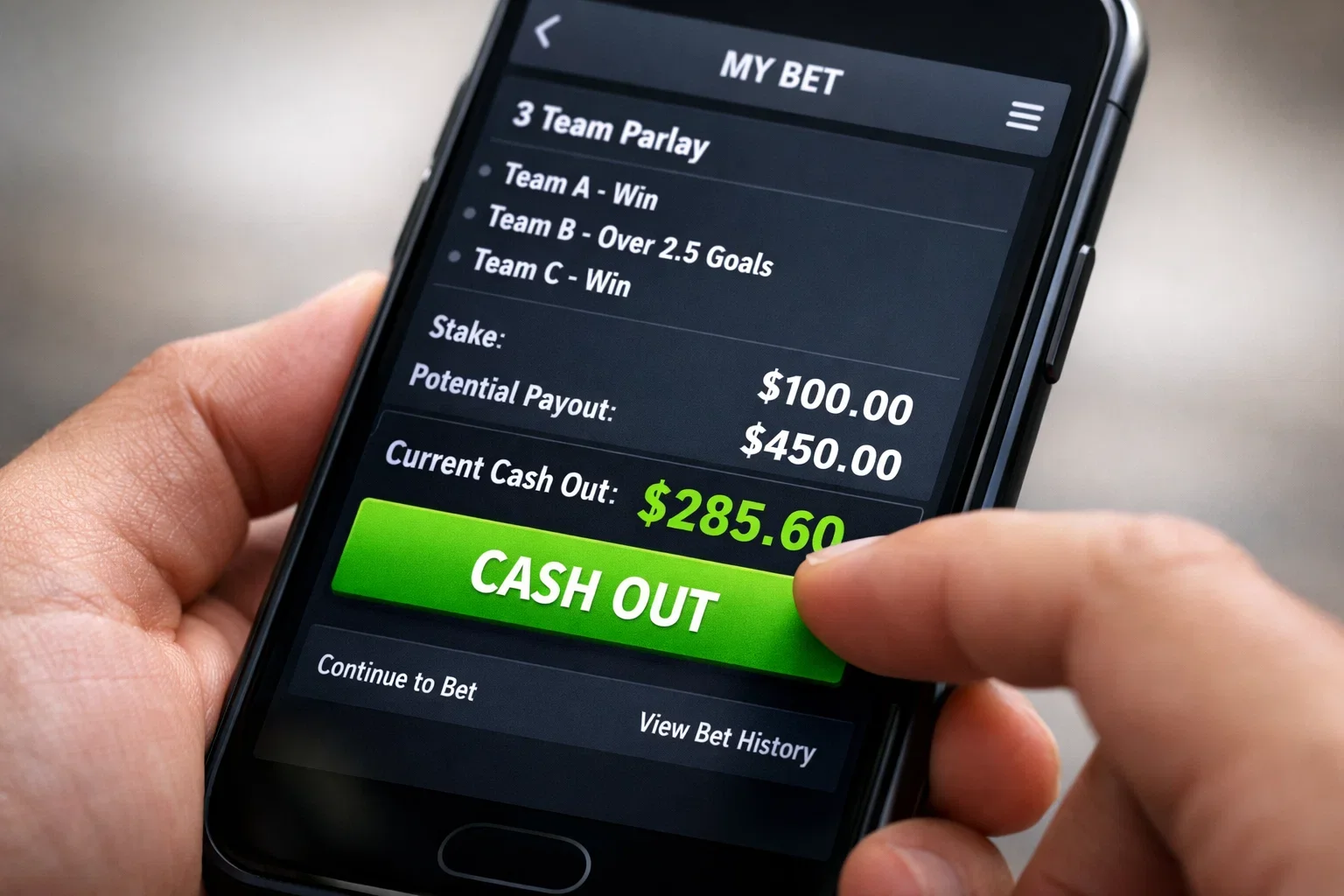
The cash out button represents one of modern sports betting's most psychologically loaded features. With one click, you can lock in profit on a winning position or minimize losses on a losing one – without waiting for the final whistle. But that convenience comes at a cost, both financial and analytical. Understanding when to cash out, when to let positions ride, and how bookmakers price cash out offers separates strategic bettors from those donating value back to the house.
How Cash Out Works
Cash out allows bettors to settle bets before the underlying event concludes. The bookmaker offers a price to buy back your bet based on current odds and match situation. Accept the offer, and you receive the cash out amount immediately. Decline, and your original bet continues to its natural conclusion.
Full cash out closes your entire position. If you backed Barcelona to beat Bayern at +180 and they're leading 1-0 at halftime, the bookmaker might offer cash out at 80% of potential winnings. Accept and you receive that guaranteed amount; decline and you maintain exposure to the full +180 payout (or zero if Bayern equalizes and wins).
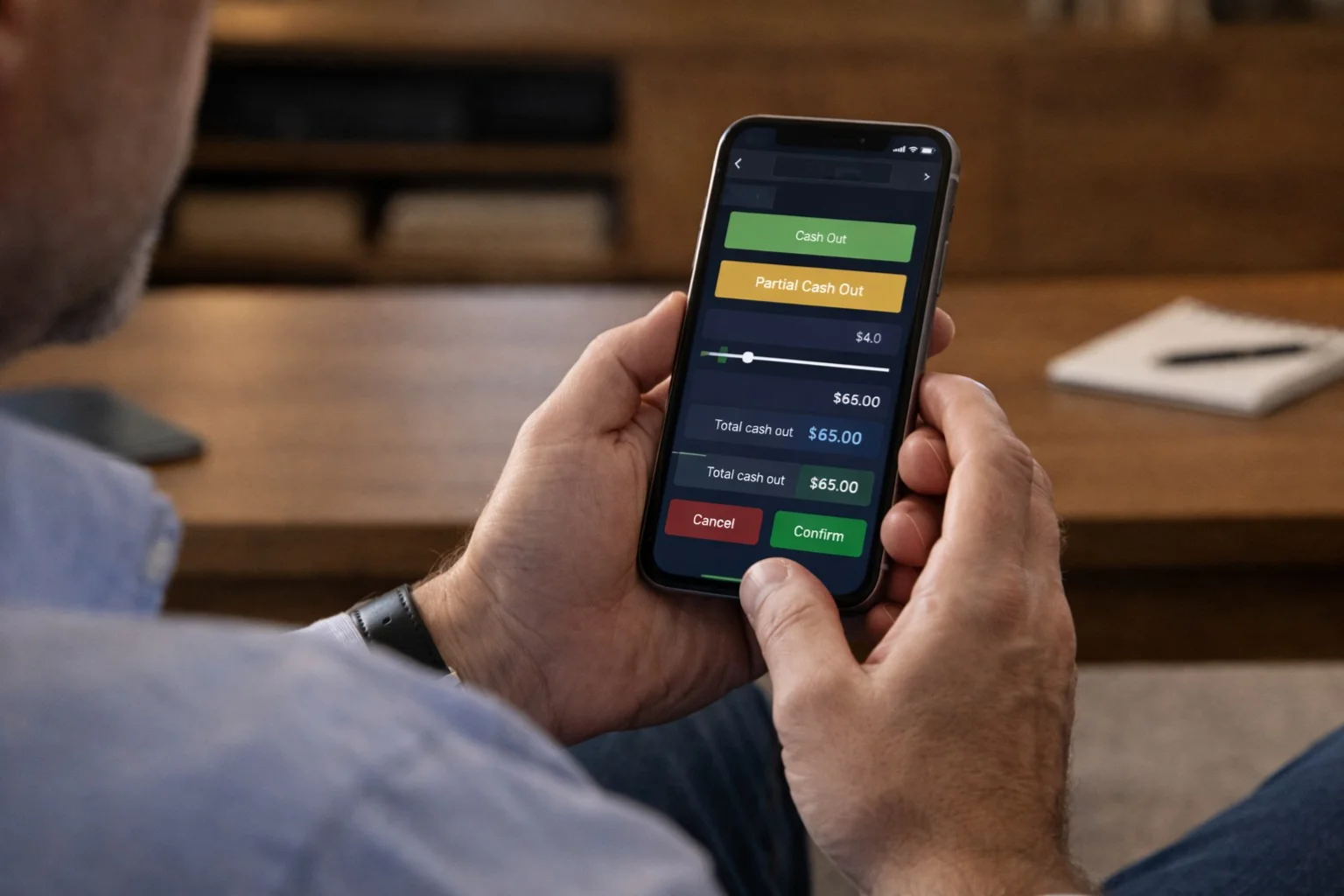
Partial cash out allows settling a portion of your bet while leaving the remainder active. You might cash out 50% of a position to lock in some profit while keeping 50% exposure to potentially larger returns. This middle path reduces but doesn't eliminate variance.
Auto cash out lets you set threshold triggers – cash out automatically if the offer reaches a specified level. This feature enables strategy implementation without constant monitoring, though it also removes real-time decision-making flexibility.
The Mathematics of Cash Out Offers
Bookmakers don't offer cash out from generosity. Cash out prices systematically favor the house.
Margin extraction occurs through cash out offers just as through initial odds-setting. The cash out offer reflects current fair odds adjusted for bookmaker margin. If live odds on Barcelona winning are -200 (implying 66.7% probability), the cash out offer prices that probability with margin built in – you might receive value equivalent to only 63% implied probability.
Volatility affects offers because uncertain situations create risk for bookmakers. When cash out offers must account for wide ranges of possible outcomes, bookmakers protect themselves with larger margins. Stable situations produce more favorable cash out offers than volatile ones.
Original odds lock-in means your cash out offer relates to your original bet, not current market conditions. Someone who backed Barcelona at +180 sees different cash out offers than someone who backed them at +120, even during the same match at the same moment.
Expected value comparison should frame every cash out decision. Calculate what the remaining position is worth based on current probability assessment, then compare that to the cash out offer. If the offer exceeds your assessment of remaining expected value, cash out. If it falls short, decline.
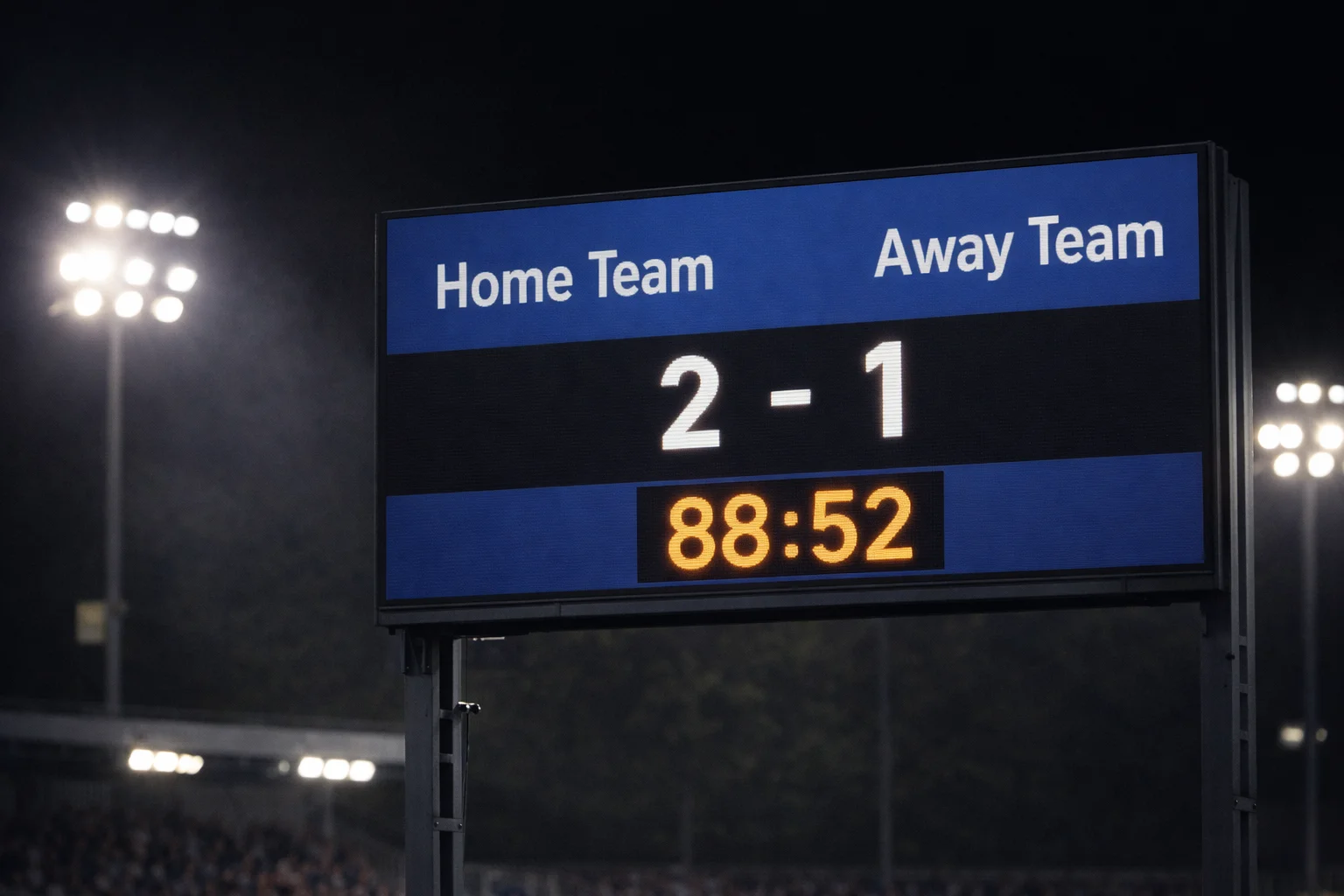
When to Cash Out on Winning Positions
Cashing out winners feels painful – you're giving up potential profit. But sometimes it's correct.
New information changes probability assessment. Your pre-match analysis might have supported backing Manchester City, but if Kevin De Bruyne gets injured at 0-0 in the 20th minute, your probability model has fundamentally changed. Cash out offers let you act on updated assessments without waiting for natural bet resolution.
Hedge situations across multiple bets sometimes favor cash out on one position to guarantee overall profit. If you have multiple outright tournament bets and one is close to winning, cashing that position locks in returns regardless of final outcome while maintaining other exposures.
Emotional state compromises judgment. If you're watching a match where your position is winning but your stress level makes rational decision-making impossible, cashing out removes the psychological burden. This isn't mathematically optimal but might be personally necessary.
Original analysis was flawed. Sometimes reviewing a position during a match reveals that your pre-match analysis was mistaken. If you now believe the correct odds differ from what you bet, cash out offers an exit even when currently winning.
When to Cash Out on Losing Positions
Cashing out losers also carries psychological weight – it crystallizes losses that might reverse.
The position is definitively lost. If Barcelona trails 3-0 at the 85th minute, the probability of winning is near zero. Cash out offers on nearly dead positions are tiny, but tiny returns exceed complete loss. Taking minimal cash out preserves some stake rather than accepting total loss.
Revised probability assessment exceeds cash out implied probability. Work backwards from the cash out offer to determine what probability it implies. If you believe your team's actual win probability exceeds that implied probability, declining cash out has positive expected value. If your assessment is lower than the implied probability, cash out makes sense.
Limiting losses enables better future decisions. A significant losing position creates psychological pressure that affects other betting decisions. Cashing out to minimize damage might reduce expected value on that specific bet but improve decision quality across your overall betting activity.
The opportunity cost of exposure might exceed remaining expected value. Capital tied up in a likely losing position can't be deployed elsewhere. If better opportunities exist, freeing capital through cash out might maximize overall returns even if the specific cash out has negative expected value.
When to Refuse Cash Out
Disciplined bettors often refuse cash out offers because letting positions resolve produces better expected outcomes.
Your probability assessment exceeds implied offer probability. This is the core mathematical case for refusing cash out. If you believe Manchester City has 70% chance to win from current position but the cash out offer implies only 60%, declining the offer has positive expected value.
Original analysis remains valid. Not every in-match fluctuation invalidates pre-match analysis. A team might trail early due to an unlucky deflection while still being the superior side. If nothing fundamental changed – no injuries, no red cards, no tactical revelation – the pre-match analysis that identified value still applies.
Variance tolerance remains sufficient. Accepting expected value requires accepting variance. If your bankroll and psychological state can handle potential losses without damage, refusing cash out to capture expected value makes sense. Cash out primarily serves those who can't tolerate variance inherent in letting bets resolve.
The cash out margin is excessive. Some bookmakers offer worse cash out prices than others. If the margin built into the offer is unusually large, declining becomes more attractive even when probability assessments are uncertain.
Partial Cash Out Strategies
Partial cash out offers middle ground between full cash out and no cash out.
Securing guaranteed return while maintaining upside is the primary partial cash out use. If you've bet $100 to win $180 and can cash out 60% for $90 in profit, taking partial cash out guarantees $90 while keeping $40 potential additional profit (or $40 potential loss) on the remaining 40%.
Scaling out as probability increases mimics investment strategies. As your position becomes more likely to win, gradually cashing out portions locks in increasing returns while maintaining exposure. Some bettors cash out 25% at halftime, another 25% at the 70th minute, and let 50% ride to natural conclusion.
Managing psychological intensity through partial cash out reduces stress without eliminating engagement. Having some guaranteed profit makes watching the remainder less agonizing than all-or-nothing exposure.
Adjusting position size through partial cash out responds to changed probability assessments. If you originally thought the bet was excellent but now think it's merely good, reducing exposure through partial cash out matches your revised conviction level.
Cash Out and Live Betting Interaction
Cash out and live betting create interrelated strategic options.
Cash out versus hedging presents alternative approaches to similar goals. Rather than accepting the cash out offer, you might place a separate live bet on the opposite outcome at potentially better implied odds. Compare cash out offer to available hedge odds before deciding.
Creating synthetic cash out through live hedging sometimes beats the offered cash out price. If cash out offer is unfavorable but live odds enable constructing a hedge that guarantees better returns, manual hedging outperforms cash out.
Sequential positioning uses cash out to enable new live positions. Cashing out a winning position provides capital for live bets that your original bankroll allocation wouldn't support. This isn't always wise, but it's an option the cash out feature creates.
Champions League Specific Cash Out Considerations
European knockout ties add layers to cash out decisions.
Aggregate implications across legs means a bet on qualification plays out over two matches. Cashing out after a favorable first leg might be premature; the second leg could swing dramatically. Conversely, unfavorable first legs might prompt cash out acceptance to minimize losses before second leg compounds them.
Tournament progression effects mean early round bets (like outright winner bets) traverse multiple matches. Cashing out after quarter-final qualification leaves semi-final and final risk unresolved. These long-duration bets create multiple cash out decision points.
Simultaneous match considerations on busy Champions League nights mean your attention is divided. If you can't properly monitor all matches where you have exposure, cash out on positions you can't watch might prevent adverse outcomes you'd have noticed if watching.
Common Cash Out Mistakes
Using cash out to avoid any loss produces systematically negative outcomes. Cash out offers on losing positions imply worse probabilities than actual probabilities most of the time. Reflexively cashing losing positions forfeits value across many bets.
Ignoring the margin in cash out offers treats the button as a neutral tool rather than a profit center for bookmakers. Always estimate the margin extracted before evaluating cash out decisions.
Anchoring to potential winnings rather than probability assessment lets irrelevant numbers influence decisions. How much you could have won doesn't affect the current probability or the correct decision from this moment forward.
Treating cash out as free option ignores that the option's cost is built into the offer. You pay for cash out flexibility through reduced offer prices. This isn't free insurance – it's purchased insurance with costs reflecting expected use.
Decision inconsistency based on match excitement rather than probability shifts produces random rather than strategic cash out use. The correct decision framework applies equally to boring 0-0 draws and thrilling 3-3 encounters.
Cash out is a tool. Like all tools, it can be used skillfully or clumsily, for appropriate purposes or inappropriate ones. Understanding when cash out genuinely improves outcomes versus when it merely reduces variance while forfeiting expected value transforms cash out from psychological crutch into strategic instrument.
