
CL Team Form Analysis
 Available in US

A team winning five straight domestic matches seems irresistible to back in their next Champions League fixture. The form is there, the confidence is high, momentum carries forward – right? Not necessarily. Translating domestic form to European performance is football analysis's most common trap. Different competition contexts, rotation patterns, tactical adjustments, and opponent quality gaps create discontinuities that make domestic results unreliable Champions League predictors.
Why Domestic Form Misleads
Competition intensity differs between domestic and European matches. A team coasting through a mid-table domestic opponent with 60% effort operates differently than one facing Champions League elimination needing 100% commitment. Form built against weaker opposition at reduced intensity doesn't automatically transfer to elite European fixtures.
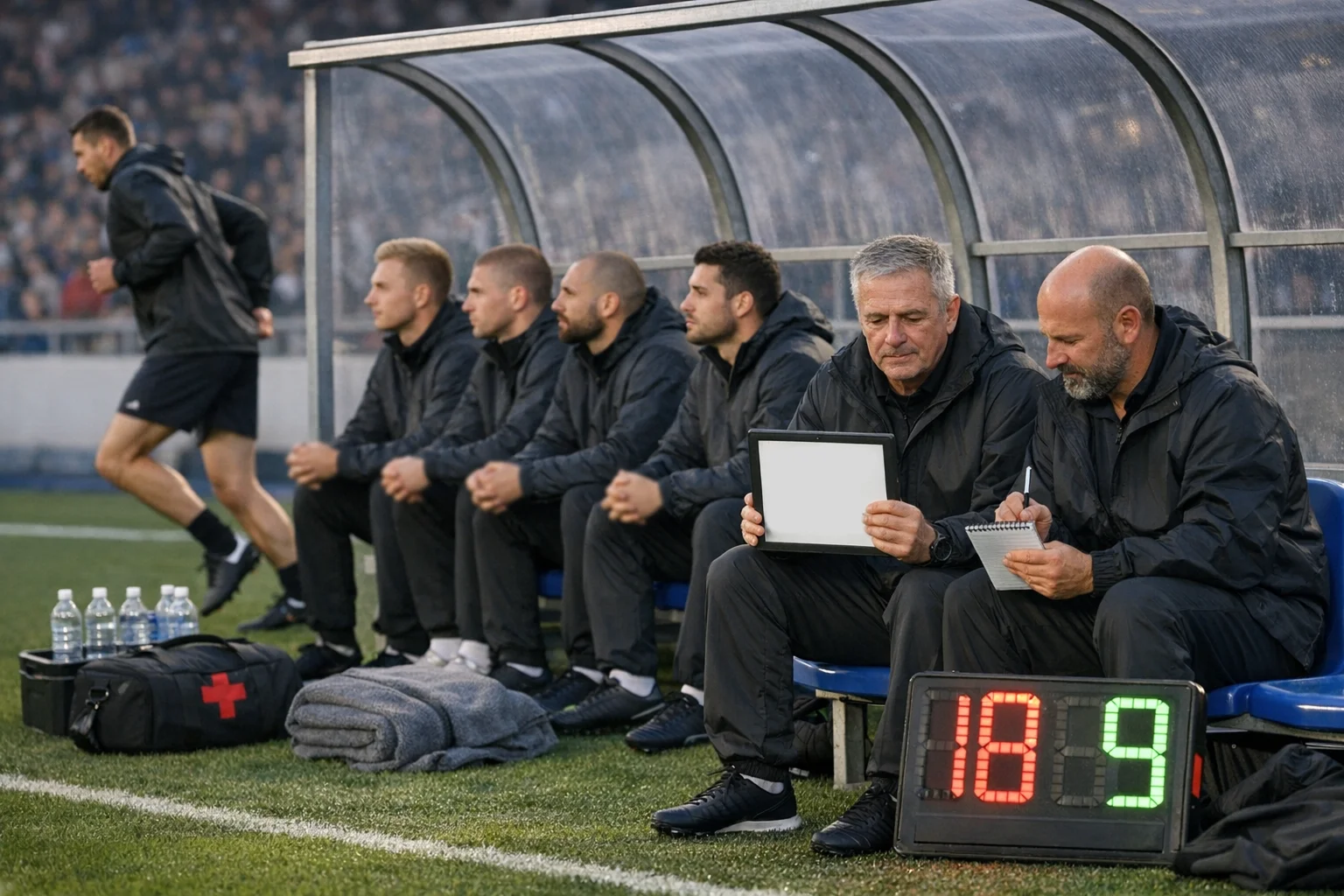
Rotation patterns create squad discontinuity between competitions. Managers frequently rest key players for domestic matches between European fixtures, then deploy full-strength sides for Champions League nights. The team that won domestically might be significantly different personnel than the team playing in Europe.
Tactical approaches change between competition contexts. A team pressing aggressively in the Premier League might play conservatively in Champions League away legs. A side building from the back domestically might go more direct against European pressing. Form in one tactical context doesn't guarantee form in another.
Opponent quality gaps distort form interpretation. Winning 4-0 against a struggling domestic bottom-half side proves different things than winning 1-0 against a Champions League caliber opponent. Raw results don't distinguish between quality-adjusted performances.
Schedule context affects performances. Domestic matches between Champions League fixtures might see reduced intensity as managers prioritize European competition. Strong domestic results in these spots might reflect opponent weaknesses rather than genuine form.
The Rotation Problem
Elite clubs rotate squads extensively, creating effectively different teams for different competitions.
European specialist lineups emerge at many clubs. Certain players start Champions League matches consistently while others feature domestically. Evaluating "the team's" form conflates two different collections of players.
Return from rotation affects European performance. A player rested domestically enters Champions League fixtures fresh but potentially lacking match sharpness. A player who played 90 minutes domestically three days earlier might be fatigued for European duty.
Injury management across competitions means domestic availability doesn't guarantee European availability. A player nursing a minor issue might skip domestic matches to be ready for Champions League. Alternatively, overload might cause injuries that weren't apparent in domestic victory.
Youth integration often occurs in domestic matches while European matches feature experienced lineups. Domestic form built with promising youngsters doesn't apply when seasoned veterans replace them for European nights.
Reading European-Specific Form
Champion League form itself provides more relevant data than domestic results. How has the team performed in their league phase matches? Against which quality levels? With what tactical approaches?
Recent European matches weight heavily regardless of domestic results between them. A team that lost their last Champions League match carries that European-specific form even if they've won three domestic matches since.
Pattern analysis across European ties reveals tendencies that domestic play might not show. Some teams consistently start slowly in Europe; others elevate against continental opponents. These patterns require European-specific observation.
Tactical adaptations for Europe become visible through European match analysis. How does the team change shape against elite pressing? How do they defend without the ball against top creative players? These questions require European evidence, not domestic observation.
Quality Context Matters
Opponent caliber in domestic matches must factor into form evaluation. Beating Arsenal provides different form evidence than beating Southampton. Raw "form" counting recent results without quality adjustment misleads consistently.
Champions League opponent quality often exceeds domestic opponent quality for most clubs. Premier League mid-table sides are weaker than Champions League last-16 opponents. Form against domestic opposition doesn't predict performance against European elite.
Quality-adjusted form metrics produce more accurate assessments. Rather than counting wins, evaluate performance relative to opponent strength. A team narrowly beating strong opposition demonstrates different form than one thrashing weak opponents.
European experience level of opponents matters. Facing a Champions League newcomer differs from facing a club with decades of continental experience. Form against inexperienced European opponents might not transfer to matches against tournament veterans.
Motivation and Priority Analysis
Competition prioritization varies between clubs and seasons. A team prioritizing league title might treat Champions League as secondary, reducing intensity and focus. Another team with league position secure might elevate European effort.
Season context affects motivation. Early-season Champions League matches might see different intensity than spring knockout rounds. Domestic form during these different phases carries different implications for European translation.
Squad depth enables dual focus for elite clubs but forces choices for thinner squads. Manchester City can compete fully in both competitions; a club with 16-18 quality players might sacrifice one to protect the other.
Manager philosophy on competition priorities reveals itself over seasons. Some managers clearly prioritize Europe (Ancelotti's Champions League focus); others emphasize domestic success (various Premier League managers). Understanding these priorities predicts where teams will perform best.
Building Accurate Form Models
Separate form tracking by competition. Maintain domestic form, European form, and combined form as distinct metrics. Weight each appropriately for the specific match you're evaluating.
Account for personnel overlap. If the team that won domestically shares 8 of 11 starters with the expected European lineup, form transfer is more justified. If only 5 starters overlap, form from the different lineup provides limited insight.
Adjust for opponent quality systematically. Use Elo ratings, league positions, or other quality metrics to weight form results. Strong results against strong opponents indicate genuine form; strong results against weak opponents indicate less.
Consider schedule position. Form achieved when fresh versus form achieved amid fixture congestion carries different implications. A team winning despite playing three matches in eight days demonstrates resilience; one winning with a week's rest faces different demands.
Track underlying metrics alongside results. xG, possession, chance creation, and defensive actions tell more than final scores. A team with poor recent results but strong underlying metrics might be due for results improvement.
Practical Form Evaluation
Before Champions League matches, systematically evaluate:
What are the team's last three Champions League results and performances? What European-specific patterns have emerged? Which players will likely start based on rotation patterns? How does recent domestic schedule affect fitness and freshness? What's the opponent quality in recent matches versus the upcoming opponent? How does the manager typically approach this competition phase?
Red flags for form translation include heavy domestic rotation suggesting European priority, dominant domestic results against very weak opposition, and tactical approaches domestically that won't apply in European context.
Green flags for form translation include consistent personnel across competitions, quality-adjusted strong performances domestically, and tactical approaches that mirror European requirements.
Common Form Analysis Mistakes
Counting wins without context treats all victories equally. Five wins including two against relegation-threatened opponents and three with heavily rotated sides provide different form evidence than five wins against top-half clubs with full-strength lineups.
Ignoring recency weights old results equally with recent ones. Form from two months ago matters less than form from last week – but even recent domestic form matters less than recent European form for European matches.
Assuming momentum transfers mechanically projects confidence from one context to another. Psychological momentum is real but fragile; a team confident from domestic success might lose that confidence immediately upon facing elite European opposition.
Overlooking fixture congestion effects evaluates form without considering schedule demands. A team in great domestic form that's played every three days for a month might be physically depleted despite good results.
Treating team as monolithic ignores how rotation creates different teams. "Manchester City is in great form" might be accurate for their European lineup, their domestic lineup, or both – but assuming form transfers between different XIs misleads.
Practical Form Translation Assessment

Before each Champions League fixture, conduct systematic form translation evaluation using this framework.
Start with European-specific form assessment. List the team's last three to five Champions League matches, noting opponents, results, and underlying performance metrics. This European form baseline matters more than any domestic results.
Next, evaluate domestic form with context. Don't just count wins – assess opponent quality, lineup strength, tactical approach, and schedule position. A victory with the reserve squad against a relegation candidate provides minimal insight for Champions League projection.
Calculate personnel overlap between recent domestic lineups and expected European lineup. If fewer than six starters match, domestic form data applies to different players than those who'll take the pitch in Europe.
Assess fixture context and competition priority. Where does this Champions League match fall in the team's priority hierarchy? Are they protecting key players for bigger matches ahead? Have they already secured their objectives in one competition, shifting focus to the other?
Review form trajectory through underlying metrics. A team might have won recent matches while xG shows declining chance quality – suggesting results likely to worsen. Conversely, losses with strong underlying metrics suggest improvement ahead.
Finally, synthesize all factors into adjusted form assessment. A team in genuine form with consistent personnel, strong underlying metrics, and aligned competition priority translates well. One with surface results built on rotation, weak opponents, and divergent tactics translates poorly.
Domestic form provides context for Champions League betting – but only context, not prediction. The wise bettor distinguishes between form that genuinely transfers to European competition and form built in conditions that won't replicate on continental stages. When the Champions League anthem plays, the teams that take the pitch often differ substantially from those that won domestic matches the previous weekend.
