
CL Accumulator Tips
 Available in US
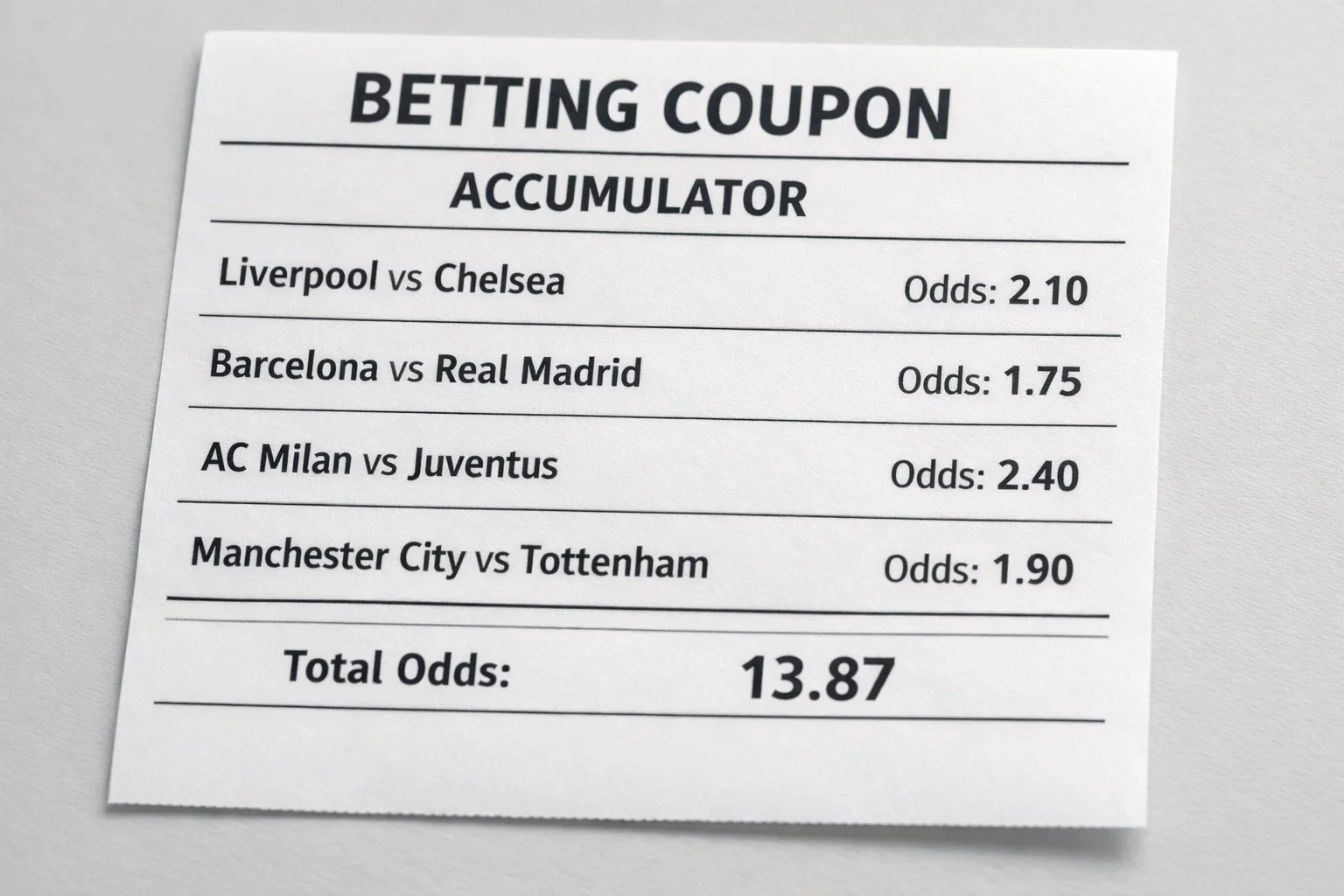
The accumulator – acca, parlay, multi, combo, whatever your bookmaker calls it – remains football betting's most seductive and dangerous format. Combine four Champions League selections at +200 each and suddenly you're looking at +3500 potential returns from a modest stake. The mathematics promise life-changing wins; the reality delivers consistent losses. Yet accumulators aren't inherently foolish. Used strategically with realistic expectations, they can serve purposes that straight bets cannot. Understanding when accumulators make sense, how to construct them intelligently, and what truly differentiates profitable approaches from recreational gambling transforms how you engage with multi-bet formats.
The Mathematics of Accumulators
Accumulators multiply individual selection odds to produce combined prices. A four-leg acca with each selection at 2.00 decimal odds (even money) produces combined odds of 2.00 × 2.00 × 2.00 × 2.00 = 16.00. Your £10 stake returns £160 if all four selections win.
Probability multiplication works against you just as powerfully. If each selection has 50% win probability, your four-leg acca has 0.50 × 0.50 × 0.50 × 0.50 = 6.25% probability of winning. You're trading high probability of small losses for tiny probability of large wins.
Margin compounding devastates accumulator expected value. Each selection carries bookmaker margin – typically 5-10% on main football markets. In single bets, you overcome 5% margin with 5% edge. In four-leg accumulators, you need to overcome roughly 20% compounded margin (it's actually slightly less than pure multiplication, but the principle holds). Finding 20% collective edge across four selections is extraordinarily difficult.
Expected value calculation for accumulators follows the same formula as single bets, just with multiplied odds and multiplied probabilities. If your true probability assessment is 7% for a four-leg acca priced at +1500 (16.00 decimal), expected value is (0.07 × 16.00) - (0.93 × 1.00) = 1.12 - 0.93 = +0.19, or roughly 19% expected value. But if your true probability is 5% – matching the odds-implied probability after margin – you have negative expected value.
Why Bookmakers Love Accumulators
Sportsbooks aggressively promote accumulators for straightforward mathematical reasons.
Higher margins per bet result from compounding. A recreational bettor placing four single bets at 5% margin each generates 5% expected revenue on each bet. The same bettor placing a four-leg accumulator generates closer to 18-20% expected margin equivalent. Accumulators are simply more profitable for the house.
Longer shot appeal attracts recreational bettors seeking excitement over profit. The dream of turning £10 into £5,000 generates betting activity that mathematical reality can't dampen. This aspirational component makes accumulators marketing gold.
Lower variance for the bookmaker seems counterintuitive since accumulators feature occasional large payouts. But across thousands of accumulator bets, the expected profit percentage exceeds single bet portfolios. Bookmakers happily accept occasional large losses knowing their systematic edge is higher.
Promotional flexibility allows bookmakers to offer acca bonuses, boosts, and insurance that appear generous while maintaining positive expected value. Adding 10% to accumulator winnings sounds great but might still leave the bettor facing negative expected value after the boost.

When Accumulators Might Make Sense
Despite mathematical challenges, accumulators serve legitimate purposes in certain contexts.
Entertainment value has genuine worth. If you enjoy the excitement of following multiple matches with combined stakes and accept losing as the entertainment cost, accumulators provide that excitement efficiently. This is recreational gambling openly acknowledged as such.
Bankroll limitations make accumulators the only route to meaningful returns for small-stakes bettors. If you can only bet £5 and straight bets at -110 won't meaningfully impact your life, accumulator potential – however unlikely – at least offers theoretical significance.
Promotional exploitation through acca bonuses and boosts can occasionally create genuine positive expected value. If a bookmaker offers +50% on 5+ leg accumulators and you can construct combinations with sufficient underlying edge, the promotion might flip expected value positive. This requires rigorous calculation, not assumption that promotions equal value.
Hedging vehicles for outright bets sometimes involve accumulators. If you hold a futures bet that's close to cashing, an accumulator on scenarios that prevent your futures bet from winning creates guaranteed profit structures.
Constructing Champions League Accumulators
If you're going to build accumulators, construction quality matters enormously.
Limit leg count ruthlessly. Every additional leg reduces probability multiplicatively while margin compounds additively. Three-leg accumulators already face significant mathematical headwinds; six-leg accumulators are lottery tickets. If you're profit-seeking, keep leg counts minimal.
Avoid heavy favorites stacking. Combining five -400 favorites feels safe but produces terrible expected value. You're taking massive correlation of losing your entire stake on any single upset while gaining minimal odds enhancement. The perceived safety is illusory.
Mix leg types and correlations. Combining results from unrelated matches reduces correlation effects that same-match combinations carry. Barcelona vs Bayern and Liverpool vs Napoli operate independently; their outcomes don't influence each other beyond general uncertainty.
Apply genuine analysis to each leg. Every selection should stand as a bet you'd place individually if forced to choose. Adding "probably okay" selections to reach preferred odds dilutes analytical rigor with hope.
Consider timing diversity. Champions League matchdays feature multiple kickoff times. Accumulators spanning early and late matches remain live longer, providing extended entertainment if that's part of your purpose.
Accumulator Variations
Doubles and trebles represent the smallest accumulator structures with lowest margin compounding. Two or three well-analyzed selections combined produces the accumulator format's odds enhancement with somewhat manageable probability reduction.
Lucky 15, Lucky 31 and similar system bets cover multiple accumulator combinations from a set of selections. A Lucky 15 includes four singles, six doubles, four trebles, and one four-fold from four selections. These systems guarantee returns from any winner but require increased stakes – you're essentially buying insurance against partial success.
Each-way accumulators on goalscorer markets or other place-paying options hedge main bets with smaller returns for near-misses. These increase complexity while providing downside protection.
Banker accumulators designate one "certain" selection that must win for any returns, combined with multiple other legs where only some must hit. These structures suit high-conviction anchors with more speculative additions.
Champions League Accumulator Patterns
Tuesday/Wednesday splits allow building separate accumulators for each Champions League night, spreading exposure across matchdays rather than concentrating on single evenings.
Tournament stage targeting recognizes that league phase matches differ from knockout rounds. League phase accumulators might target heavy favorites against weaker opponents; knockout accumulators might focus on unders in tactical first legs.
Draw targeting exploits the relatively higher prices on draws when building all-draw accumulators. These long-shot approaches accept very low hit rates in exchange for occasional substantial payouts. Statistical studies suggest draws are sometimes underpriced relative to their frequency, though margin still applies.
Both teams to score accumulator patterns target high-hit-rate selections that occur across many Champions League matches. BTTS hits around 50% of matches historically, making multi-leg BTTS accas more achievable than result-based combinations – though the odds per leg are correspondingly lower.
Managing Accumulator Risk
Stake appropriately. Accumulator stakes should represent a small fraction of what you'd bet on singles. If your normal bet is £50, accumulator stakes might be £5-10. The higher variance demands lower exposure per bet.
Accept total loss as the default outcome. Most accumulators lose. Every one of them. Entering accumulators with loss expectation prevents emotional responses when the inevitable occurs.
Avoid chasing accumulator losses with larger accumulators. The "just need one big hit to recover" mentality drives catastrophic bankroll destruction. Each accumulator stands independently; past losses don't affect future probabilities.
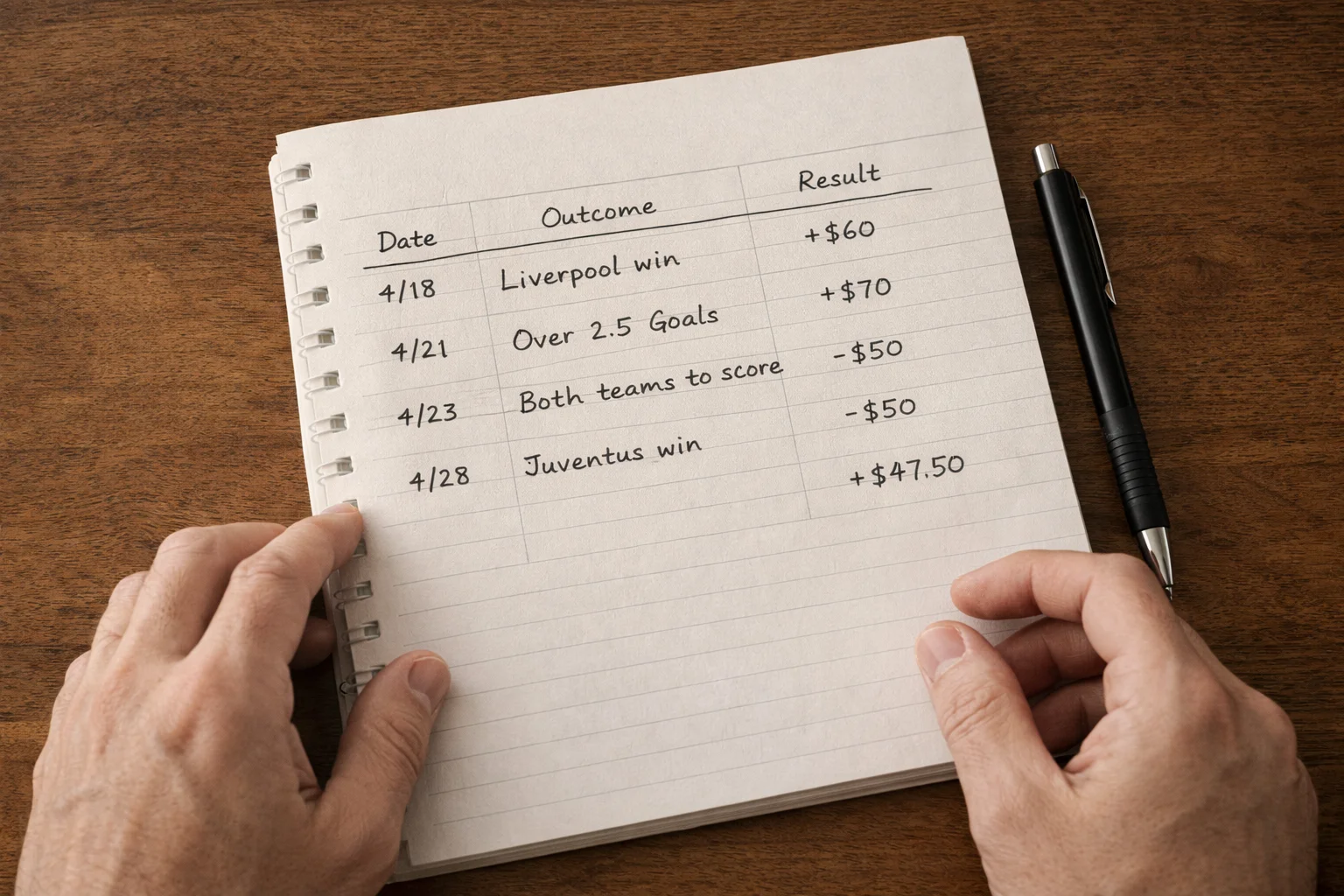
Track accumulator results separately. You might find your accumulator betting generates entertainment value but consistent losses. Seeing this data clearly helps maintain appropriate allocation between singles and accumulators.
Accumulator Promotions and Bonuses
Acca insurance refunds stakes (as cash or free bets) if one leg of your accumulator fails. This reduces variance but doesn't necessarily create positive expected value. Insurance is priced into the promotion's overall mathematics.
Acca boosts add percentage increases to potential winnings – 10%, 25%, even 100% bonuses on accumulator payouts. Calculate whether the boost overcomes the underlying negative expected value before assuming these create betting opportunities.
Early payout promotions settle accumulators as winners if your team leads by specified margins, regardless of final result. These provide genuine value in specific circumstances where blown leads would otherwise kill accumulators.
Minimum leg requirements for promotions encourage longer accumulators that benefit the bookmaker. Adding weak legs to reach promotion thresholds typically destroys more value than the promotion provides.
Common Accumulator Mistakes
Believing accumulators are paths to wealth ignores mathematical reality. Professional bettors rarely use accumulators because margin compounding makes sustainable profit nearly impossible. Recreational bettors should acknowledge this reality.
Selecting legs to reach odds targets rather than from genuine analysis reverses appropriate methodology. Build from analysis to odds, not from desired odds to rationalized selections.
Ignoring correlation between selections assumes all legs are independent when they often aren't. League-wide trends (home teams winning on a particular matchday, unders hitting across multiple matches) create hidden correlations that affect collective probabilities.
Using accumulators as primary betting format guarantees long-term losses for almost all bettors. Singles or at most doubles/trebles should constitute the majority of betting activity for anyone seeking profit rather than purely entertainment.
Celebrating near-misses as encouragement treats losing four of five selections as evidence of skill rather than losing money. Near-misses in accumulators are still losses. The final leg that fails doesn't prove you were close to success – it proves you lost.
Accumulators offer genuine entertainment value and theoretical big-win potential. They don't offer realistic profit expectations for recreational bettors. Understanding this distinction allows using accumulators appropriately: as occasional entertainment with controlled stakes, not as investment vehicles with profit expectations.
