
CL Top Scorer Betting
 Available in US

The race for Champions League top scorer combines individual brilliance with tournament context in ways no other market matches. Elite strikers from elite clubs start as favorites – but the winner often emerges from unexpected combinations of goal-scoring form, team progression, and penalty duties. Betting on the top scorer requires analyzing both player quality and situational factors that determine opportunity. Some of football's most prolific finishers have fallen short while players on deeper tournament runs accumulated goals that talent alone couldn't match.
How Top Scorer Markets Work
Champions League top scorer betting asks which player will finish the tournament with the most goals. The market typically opens before the season begins and settles after the final, with odds adjusting throughout based on accumulating goal totals and remaining match opportunities.
Dead heat rules apply when multiple players finish level on goals. If three players tie for first, the payout divides accordingly – backing one of them returns one-third of the winning odds. This outcome has become increasingly common as knockout round exits limit goal-scoring opportunities.
Qualification matters for top scorer betting. A player whose team exits in the league phase can still win if they've accumulated sufficient goals, but they'll play fewer matches than finalists. Maximum match counts vary based on tournament progression: league phase only (8 matches), playoff exit (10), Round of 16 exit (12), and so on up to final participants (potentially 17 matches including playoffs).
Goals only, not assists count for top scorer. A player who creates chances but relies on teammates to finish won't win this market regardless of overall contribution. Pure goalscoring – finished chances, penalties converted, fortunate deflections – determines the winner.
Key Factors for Top Scorer Analysis
Team tournament depth is the most critical factor. A good striker on a great team that reaches the final has 15-17 match opportunities; an excellent striker whose team exits in the Round of 16 has only 10-12. This opportunity differential overwhelms individual quality differences. Backing strikers from projected deep-run clubs gives more chances to score.
Penalty taking duties provide guaranteed high-quality chances. In Champions League knockout ties, penalties arise regularly through defensive desperation, VAR interventions, and high-pressure attacking. A designated penalty taker on a team reaching later rounds might add 3-4 goals from the spot alone.
Expected goals (xG) profiles indicate scoring efficiency. Some players consistently outscore their xG – finishing more chances than average striker would from those positions. Others underperform xG despite volume. Sustainable top scorer candidates typically have strong xG profiles indicating they convert opportunities at elite rates.
Set piece involvement beyond penalties adds scoring opportunities. Players taking corners, free kicks, or attacking free kick deliveries might score directly or benefit from second-ball situations. These dead-ball opportunities supplement open-play chances.
Playing time certainty affects opportunity accumulation. A clear first-choice striker plays 85-90 minutes most matches; a rotation option might average 60-70 minutes. Over a tournament, this playing time differential translates to significant opportunity differences.

Analyzing the Favorites
Market leaders typically include the usual suspects – Haaland, Mbappé, Lewandowski, Kane – but each carries specific considerations.
Volume scorers like Haaland offer high goal-per-game rates but depend on Manchester City's tournament progression. City's defensive strength means matches might be 1-0 or 2-0 affairs rather than 4-3 shootouts, potentially limiting Haaland's raw totals despite efficiency.
Tournament specialists with exceptional Champions League records deserve attention. Some players elevate specifically in European competition – Ronaldo's record 140 Champions League goals exemplifies this phenomenon. Identifying current players with similar tournament-specific elevation adds analytical edge.
New club adjustments affect players in their first season at new clubs. A striker who moved clubs might need time to integrate with new teammates' movement patterns and service quality. First-season Champions League campaigns at new clubs historically produce fewer goals than established situations.
Age curve considerations matter for experienced players. Strikers in their early thirties might maintain domestic production while declining in Champions League intensity. The physical demands of knockout football can expose declining acceleration or stamina.
Finding Value in the Market
Top scorer markets often offer value outside the obvious favorites.
Second striker on elite team sometimes provides value. If Barcelona's Lewandowski is priced at +400 but a younger attacking midfielder/forward is +1500 and takes some penalties while playing similar minutes, the value proposition differs despite seemingly similar situations.
Strikers on dark horse teams can offer extreme value if their team exceeds expectations. A forward priced at +5000 whose team unexpectedly reaches the semi-finals might outscore favorites whose teams exited earlier.
Penalty taker changes during the season create adjustment windows. If a team's regular penalty taker gets injured and duties shift to a forward priced for fewer goals, odds might not immediately reflect the new penalty opportunities.
Early-season goal bursts in the league phase can establish leads that hold through knockout rounds where goals become scarcer. Backing players who face weaker league phase opponents and might score five or six goals before knockout rounds begin captures early accumulation advantage.
Tournament Progression Analysis
Understanding how teams are likely to progress informs top scorer projection.
Projected knockout paths affect goal-scoring opportunity. A striker whose team faces defensive-minded opponents through knockouts might have fewer chances than one facing open, attacking opponents. Barcelona facing counter-attacking specialists differs from Barcelona facing possession-oriented sides.
Two-leg tie dynamics reduce per-match scoring compared to league play. Knockout conservatism, tactical preparation, and away-leg caution all suppress goal totals relative to regular matches. Top scorer candidates must overcome this structural suppression.
Final participation provides massive opportunity differential. Finalists potentially play 15-17 matches; Round of 16 exits play only 10. This 50-70% opportunity difference overwhelms most individual quality differentials.
Group/league phase opponent quality affects early goal accumulation. A striker facing league phase opponents from weaker associations might score five or six goals before knockouts begin; one facing only elite opponents might have two or three. This early differential can persist if knockout opponents equalize opportunities.
Historical Patterns and Trends
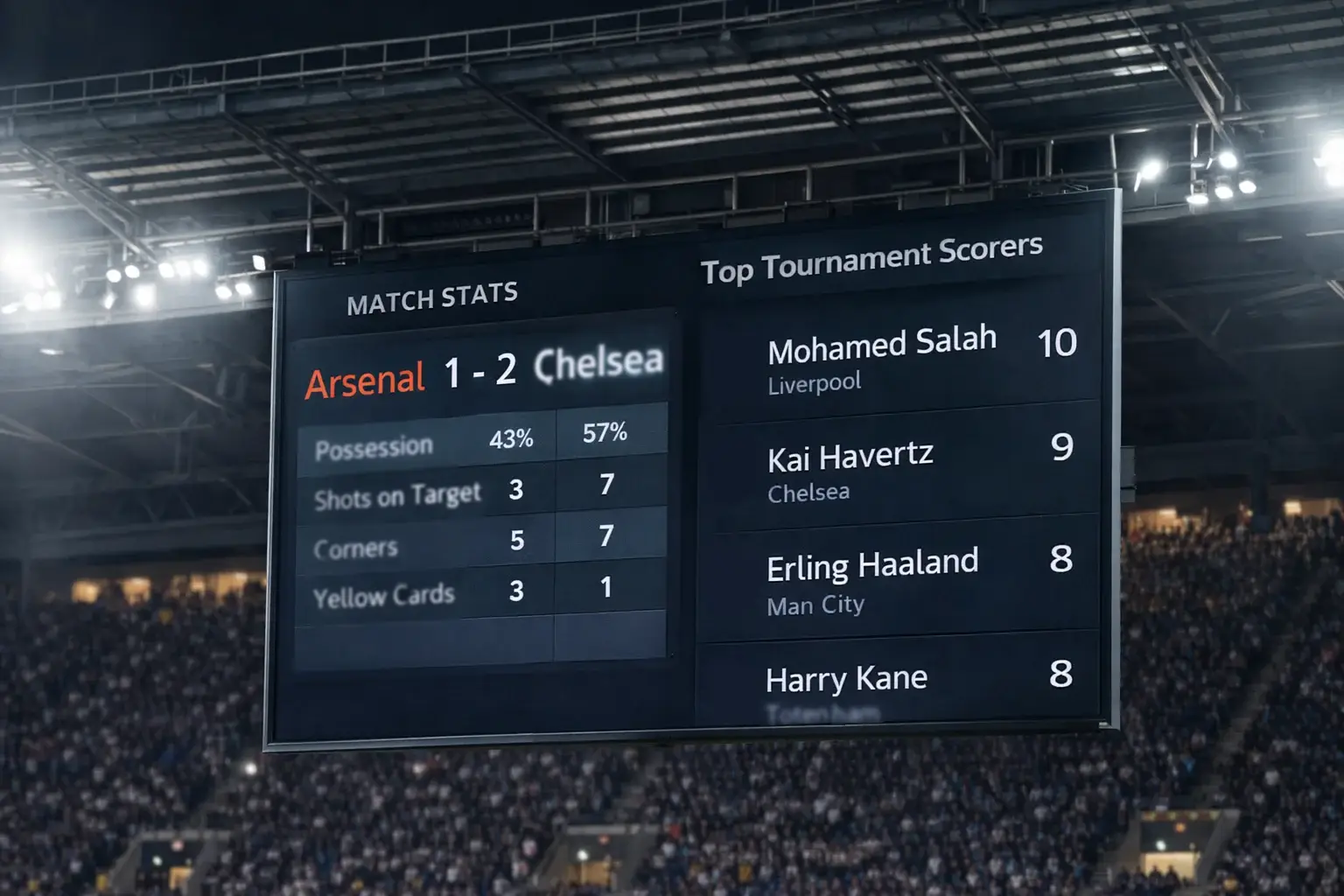
Multiple team representation in top scorer lists has increased. The winner rarely runs away from the field; typically several players finish within one or two goals. This pattern increases dead heat probability and reduces returns on individual selections.
Penalty takers dominate recent top scorer lists. Players with penalty duties enjoy significant advantages; those without must accumulate purely from open play. Analyzing penalty assignment probability adds predictive power.
Deep run teams produce winners almost universally. Top scorers rarely come from teams eliminated before quarter-finals. The opportunity differential is simply too large to overcome through individual brilliance alone.
xG overperformance sustainability varies. Some players consistently finish above xG season after season; for others, xG overperformance regresses. Analyzing multi-year patterns reveals who truly finishes at elite rates versus who benefited from temporary variance.
Strategic Approaches
Portfolio construction spreads exposure across multiple candidates. Rather than backing one player at +600, backing three players at +1000, +1500, and +2000 creates overlapping coverage where any success produces profit.
Wait-and-see timing allows observing early league phase performance before betting. If a player explodes for four goals in two matches, odds shorten – but you've seen actual performance rather than projecting from pre-season assumptions.
Hedging leaders late in tournaments converts early positions into guaranteed profit. If you backed a player at +2000 pre-season and they lead with three matches remaining, betting second-place players creates positive outcomes regardless of final result.
In-season additions when odds become favorable supplement pre-season positions. If your pre-season pick struggles early while another candidate emerges, adding that candidate at still-generous odds diversifies your top scorer exposure.
Common Top Scorer Mistakes
Ignoring team context assumes individual quality determines goals independent of opportunity. Team strength, tournament progression probability, and teammate service quality all affect individual outputs.
Overlooking penalty duties underestimates guaranteed high-quality chances. Penalties converted might represent 25-40% of top scorer totals in some seasons.
Backing eliminated team's striker wastes positions when opportunity no longer exists. Once a team exits, their striker has zero remaining goal-scoring opportunities. Any pre-elimination investment loses regardless of goals already accumulated (unless already leading and holding through tournament's end).
Recency bias on early leaders overweights league phase performance. A player with six goals after league phase appears dominant, but knockout rounds might see them blanked while patient accumulators catch up.
Insufficient attention to playing time treats all players as equal minutes. A backup striker scoring efficiently per minute but playing 60% of available minutes faces structural disadvantage against iron-man starters.
Dead Heat Considerations
Multiple winner probability should factor into bet sizing and selection. If you believe the top scorer race will likely produce a tie, individual selection value differs from runaway winner scenarios.
Late season scenarios often produce multi-player possibilities. With two matches remaining, three players might be tied or within one goal. Understanding dead heat probability informs hedging and position management decisions.
Dead heat math reduces payouts proportionally. Backing a player at +1000 who ties for first with one other player pays +500 equivalent. Ties with two others pay +333 equivalent. This reduction is automatic – no special action required.
The Champions League top scorer market rewards understanding tournament structure, penalty importance, and team progression probability more than pure individual quality assessment. The best scorer doesn't always win; the scorer with the best combination of ability, opportunity, and favorable circumstances emerges with the Golden Boot.
