
Home Advantage in CL
 Available in US

For decades, home advantage was football's most reliable betting factor. Play at home, hear your crowd roar, sleep in your own bed – and watch the winning probability climb. But something has shifted. Champions League home win rates have declined steadily, from roughly 58% in the early 2010s to below 50% in recent seasons. The old certainties about home advantage require reassessment. Understanding what's changed, what persists, and how to incorporate home/away analysis into Champions League betting determines whether you're using accurate models or outdated assumptions.
The Historical Home Advantage
Traditional home advantage in football derived from multiple sources working in combination.
Crowd support created psychological lifts for home players and pressure on visitors. The roar following a home goal, the hostility greeting away players, and the referee influence (conscious or not) from 50,000 screaming fans all contributed to home team edges.
Travel fatigue disadvantaged away teams, particularly in European competition where matches require international travel, time zone adjustments, and unfamiliar hotel environments. A team traveling from Manchester to Moscow faced different preparation conditions than one walking from their training ground.
Pitch and facility familiarity provided subtle edges. Knowing the exact dimensions, surface characteristics, and stadium quirks helped home teams. Away teams encountered unfamiliar surroundings that required adjustment periods.
Referee influence – studied extensively by academics – showed consistent home team favoritism in close calls, yellow card distribution, and added time decisions. Whether conscious or not, officials appeared affected by crowd pressure.
Historically, these factors combined to produce home win rates around 45-50% with away win rates around 25-30% and draws filling the remainder. Home teams averaged roughly 0.4 goals per match more than away teams across major leagues.
The Decline of Home Advantage
Recent data reveals home advantage erosion across European football, with Champions League showing particularly notable declines.
COVID-19 empty stadium matches provided natural experiments. During 2020-21 matches without crowds, home advantage essentially disappeared – home win rates dropped to near-parity with away rates. This demonstrated how much crowd presence contributed to historical home edge.
Post-COVID normalization saw home advantage return but not to pre-pandemic levels. Teams had learned they could compete effectively away; the psychological mystique of hostile environments had diminished.
Tactical evolution reduced home advantage through several mechanisms. Defensive organization improvements made low-block away approaches more effective. Teams became better at nullifying home attacking patterns through video analysis and tactical preparation. The away tactical playbook expanded beyond simple damage limitation.
Player professionalization reduced travel impact. Modern recovery protocols, charter flights, and sports science minimize physical disadvantages of travel. A team flying private from London to Barcelona experiences minimal disruption compared to 1980s coach travel.
VAR implementation potentially reduced referee home bias by providing objective review of key decisions. Close calls that crowds might have influenced now receive video scrutiny that's harder to sway.
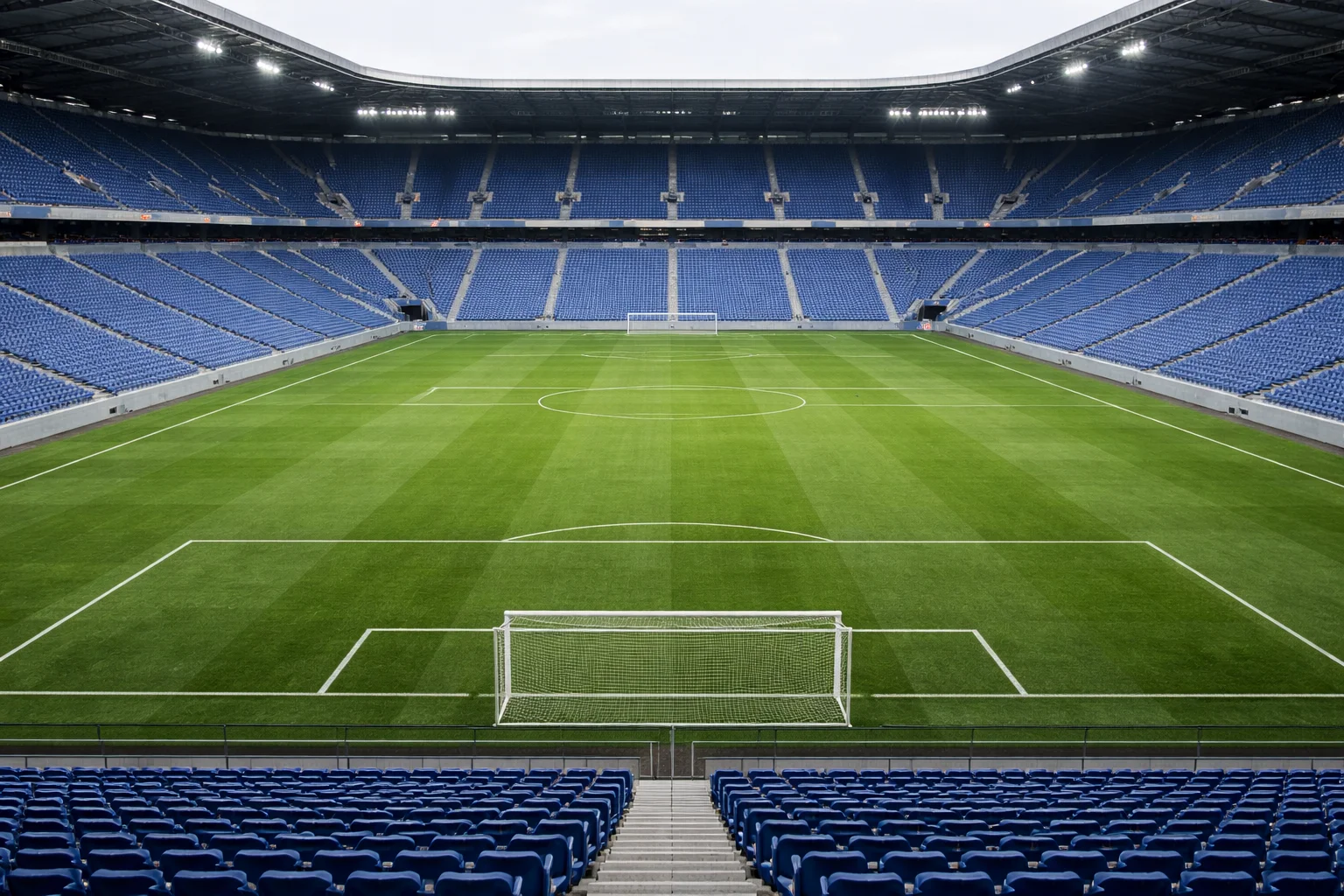
Current Champions League Home Advantage Data
Recent Champions League seasons reveal specific home advantage patterns worth understanding.
Overall home win rates in league phase matches hover around 45-50% – barely above chance and well below historical norms. Research on 2021-2024 seasons found home team winning probability around 61% in Champions League, though this varies significantly by team and matchup quality.
Home advantage variance between teams is substantial. Some clubs maintain significant home edges (Real Madrid's Bernabeu, Liverpool's Anfield under European nights) while others show minimal home/away splits. Team-specific analysis matters more than competition-wide assumptions.
Knockout round dynamics differ from league phase patterns. First legs away often see conservative approaches regardless of venue; second legs at home with aggregate deficits produce attacking intensity. These strategic factors overlay pure home advantage effects.
Elite club away performances have improved notably. Top clubs now routinely win away matches against similarly-ranked opponents – something historically rare. Barcelona winning at Bayern Munich or Manchester City prevailing at Real Madrid no longer shocks as it once might have.
Home Advantage by Team Type
Elite clubs at home still enjoy advantages, but primarily through quality differential rather than venue-specific boost. Real Madrid's home record reflects their squad quality as much as Bernabeu atmosphere.
Mid-tier clubs at home might benefit more from genuine home advantage. Clubs where crowd atmosphere represents significant factor relative to squad quality – Atalanta, Benfica, Celtic – show larger home/away performance splits.
Smaller clubs at home in Champions League often face quality differentials that overwhelm any home advantage. A Moldovan champion at home against Real Madrid receives minimal boost – the crowd can't compensate for vast quality gaps.
Specific venue effects persist for certain stadiums. High altitude venues, artificial pitches, and genuinely hostile atmospheres (Turkish clubs, Eastern European environments) still create measurable away disadvantages.
Betting Implications of Reduced Home Advantage
Adjust baseline probability assessments to reflect diminished home edge. If your model assumes 15% home advantage boost, reduce this to perhaps 8-10% for Champions League matches. Historical models overstate home team probability.
Value away teams more frequently. Markets conditioned on historical home advantage might overprice home teams, creating value on away sides. If public perception still expects strong home advantage while reality has shifted, systematic value exists.
Evaluate team-specific home/away splits rather than applying universal assumptions. Some teams genuinely perform much better at home; others show minimal splits. Using team-specific data produces more accurate probability estimates.
Consider knockout stage context separately from league phase. Strategic considerations in two-legged ties create venue dynamics beyond simple home advantage. Away first legs might see conservative home team approaches that suppress home advantage effects.
Factors That Still Favor Home Teams
European night atmospheres at specific venues genuinely affect match dynamics. Anfield under floodlights, Signal Iduna Park's Yellow Wall, and San Siro's intensity create environments that away teams find challenging regardless of tactical preparation.
Schedule and travel advantages favor home teams who prepare normally while visitors navigate logistics. A team playing Tuesday in Kazakhstan after Sunday domestic matches faces cumulative disadvantage.
Familiarity with conditions provides marginal edges in pitch, climate, and facility. These effects are smaller than historically assumed but not zero.
Referee tendencies might still favor home teams in close calls despite VAR. Subjective decisions – fouls, advantage play, card distribution – remain influenced by crowd pressure.
Analytical Approaches to Home Advantage
Calculate team-specific home/away goal differentials using multiple seasons of data. Compare each team's average goals scored and conceded at home versus away to quantify their specific venue effects.
Adjust for opponent quality. A team's home record against top opponents differs from their record against weaker sides. Quality-adjusted home advantage provides more accurate assessments than raw home win rates.
Track first-half versus second-half patterns. Some teams perform better at home early (crowd lift at kickoff) while others improve as matches progress (wearing down visitors). These within-match patterns inform live betting opportunities.
Monitor travel distance and schedule effects. A team traveling short distances (Manchester City hosting PSG) faces different away burdens than extreme travel (Celtic visiting Almaty). Weight travel effects proportionally to actual logistics.
Common Home Advantage Mistakes
Assuming historical patterns persist applies outdated models to current reality. Home advantage has genuinely declined; using 1990s or 2000s assumptions produces inaccurate probability estimates.
Treating all venues equally ignores massive variation between stadiums. Anfield and Burnley's ground both constitute "home" but create vastly different atmospheric advantages. Elite stadium atmospheres provide edges that modest venues don't.
Ignoring quality differentials conflates home advantage with quality advantage. Real Madrid's excellent home record reflects being Real Madrid, not some mystical Bernabeu boost. Separate venue effects from underlying quality when analyzing home advantage.
Overlooking knockout stage strategy applies league-phase home advantage thinking to two-legged ties. Managers explicitly manage across both legs, creating strategic dynamics that override pure venue effects.
Overweighting empty stadium evidence assumes COVID findings apply universally. Empty stadium matches were extreme experiments; normal matches with crowds still show some home advantage, just less than historical patterns suggested.
Practical Home Advantage Assessment

Before betting Champions League matches, implement systematic home advantage evaluation for the specific fixture.
Start by researching the home team's venue-specific performance over recent seasons. What's their home win rate, goals scored, and goals conceded at home versus away? Calculate the differential to quantify their specific home boost. Teams with 0.6 goals per game home advantage operate differently than those with 0.2 goals differential.
Next, consider venue-specific factors. Does the stadium create genuine atmospheric intensity or is it a quieter environment? Are there physical factors like pitch dimensions, surface type, or altitude that affect visitors? Anfield under floodlights creates different visitor challenges than the Etihad's more corporate atmosphere.
Evaluate the away team's road record specifically. Some clubs travel well in Europe – Real Madrid, Bayern Munich, Manchester City – while others struggle significantly away from home. A strong away side facing a modest home advantage might not justify heavy home favoritism.
Consider the specific match context. Is this a league phase match where both teams approach with similar intensity, or a knockout leg where strategic considerations override simple home advantage? Second leg away teams trailing on aggregate might produce attacking intensity that negates typical home advantage.
Finally, compare your assessment to market pricing. If odds imply 60% home win probability but your analysis suggests 52%, the market might be overweighting historical home advantage assumptions. This discrepancy creates potential value on away sides or draws.
Home advantage remains a factor in Champions League betting – but a smaller factor than tradition suggests. Sharp analysis requires updating assumptions, evaluating team-specific patterns, and distinguishing genuine venue effects from coincidental results. The team that treats home advantage as 2010s certainty loses edge to those recognizing 2020s reality.
