
Champions League Player Props
 Available in US
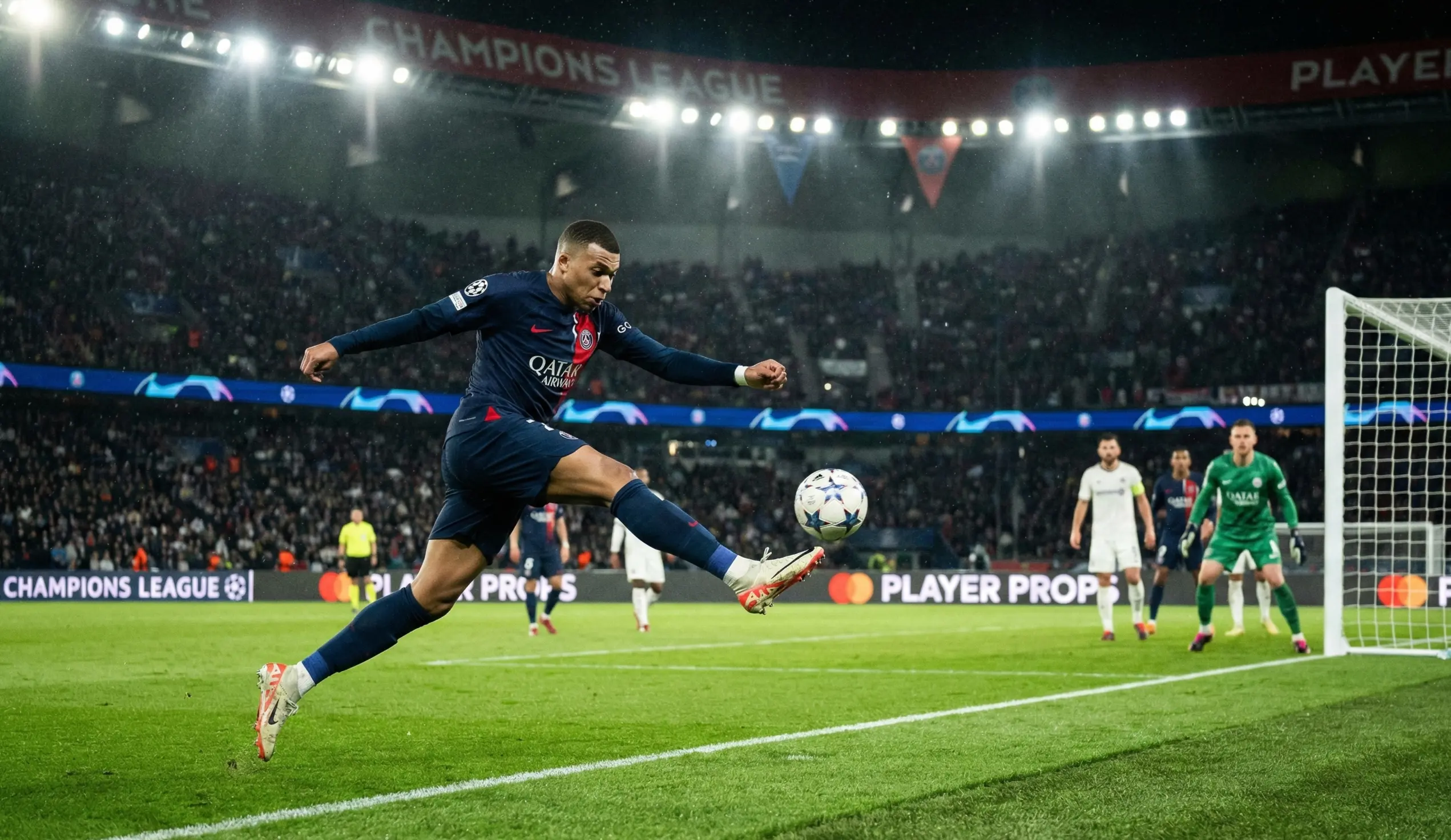
Beyond goals and match outcomes lies an entire universe of betting markets focused on individual player performance. Player props – short for proposition bets – let you wager on specific statistical outputs: how many shots a midfielder takes, whether a defender receives a card, if a playmaker records an assist. These markets transform Champions League viewing from passive entertainment into active engagement with every touch, tackle, and attempt on goal.
What Are Player Props?
Player proposition bets isolate individual performance from team results. Your bet succeeds or fails based entirely on what one player does, regardless of whether their team wins, loses, or even scores. Erling Haaland could fail to score in a 4-0 Manchester City victory, losing your anytime goalscorer prop despite the comfortable win. Conversely, he could score twice in a 3-2 defeat, winning multiple player props while his team falls short.
Bookmakers offer player props across numerous statistical categories. The most common include shots taken, shots on target, assists, passes completed, tackles won, and cards received. More exotic props cover dribbles completed, crosses attempted, offsides called, and even touches in specific zones. The depth of available markets varies by bookmaker and match prominence – Champions League fixtures typically feature extensive prop menus compared to domestic league games.
Odds on player props reflect both the probability of the outcome and bookmaker margins. A player averaging 3.2 shots per game might see their “over 2.5 shots” line priced around -130, implying roughly 56% probability. The same player’s “over 3.5 shots” might sit at +120, reflecting lower probability but higher payout potential. Understanding how bookmakers set these lines – and where they might misprice – creates opportunities for value betting.
Props settle based on official statistics, typically provided by third-party data companies like Opta. Different bookmakers may use different stat providers, occasionally producing discrepancies in recorded numbers. Always check which provider your book uses and understand their methodology – especially for subjective stats like “key passes” where definitions vary.
Shots and Shots on Target Markets
Shot-based props are among the most popular player markets because shots are frequent, trackable, and correlate with attacking involvement. A striker taking four shots feels more tangible than abstract metrics – you can count along with the broadcast graphics.
Over/under total shots sets a line based on the player’s historical shot volume. If Mohamed Salah averages 4.1 shots per Champions League match, his line might open at 3.5. Backing over means you need Salah to take four or more shots; under requires three or fewer. Half-shot increments eliminate push possibilities just like goal totals.
Shots on target narrows the requirement to shots that would enter the goal absent a save or block. This filters out wayward attempts and blocked shots, making the threshold harder to clear. A player averaging 4.0 total shots might only average 1.8 on target. The shot-to-target conversion rate varies significantly between players – clinical finishers hit the frame more often than volume shooters who pepper balls in the general goal direction.
Analyzing shot props requires understanding playing style, role, and opposition. A winger who cuts inside and shoots frequently offers different prop value than one who stays wide and crosses. Opposition defensive quality matters – compact blocks limit shooting opportunities, while open games with space increase shot volumes. Expected minutes also factor heavily; a player likely to be substituted at 60 minutes faces reduced opportunity compared to one playing the full 90.

Card Markets: Yellow and Red
Card props offer unique angles disconnected from attacking statistics. Betting on whether a player receives a yellow card requires understanding tackling patterns, referee tendencies, and match context – entirely different analytical framework than goalscoring markets.
To be booked (yes/no) is the standard card prop. Your player receives at least one yellow card and your bet wins; they stay out of the book and you lose. Red cards obviously satisfy the booking requirement since they involve either two yellows or a straight red offense.
Card timing props occasionally appear for high-profile matches, asking whether a player gets booked in the first half versus second half. These require even more granular prediction about when flashpoints occur.
Identifying players likely to receive cards involves multiple factors. Defensive midfielders who break up play through tactical fouls receive cards more frequently than box-to-box runners. Defenders facing quick attackers might commit professional fouls to stop counters. Hot-headed players with disciplinary histories pick up cards at elevated rates. Some players simply foul frequently but escape cards through lucky referee decisions – their luck eventually runs out.
Referee assignment influences card probability significantly. Some officials card liberally; others manage games with warnings and advantage play. Major Champions League matches often feature elite referees with established patterns you can research. A referee averaging 5.2 cards per match creates different expectations than one averaging 3.1.
Assists and Chance Creation Markets
Assist props reward playmaking rather than finishing. Your player must provide the final pass before a goal for the assist to register – secondary assists or hockey assists don’t count in most football stat systems.
Anytime assist mirrors anytime goalscorer structure: your player records at least one assist during the match. Unlike goals, assists depend entirely on teammates converting chances. A midfielder might create five excellent opportunities and register zero assists if teammates miss everything. Conversely, a simple square pass might yield an assist if the recipient finishes brilliantly.
Key passes – passes leading directly to shots – provide volume-based playmaking metrics less dependent on teammate finishing. A player averaging 2.3 key passes per game offers more predictable statistical output than assist-dependent props, though key pass lines typically carry more modest odds.
Evaluating assist potential requires analyzing both the creator and the finishers they supply. A playmaker feeding elite strikers has higher assist conversion on chances created than one serving inconsistent finishers. Set-piece delivery duty also matters – corner takers and free-kick crossers generate assist opportunities from dead-ball situations that open-play creators lack.
Tackles, Interceptions, and Defensive Props
Defensive player props reward actions that prevent rather than create. These markets suit bettors who understand tactical setups and positional demands beyond attack-focused analysis.
Tackles made props typically set lines between 1.5 and 3.5 depending on the player’s role. Defensive midfielders who screen the back line attempt more tackles than center-backs who defend in their own box. Full-backs facing tricky wingers might rack up tackle numbers, while those dominating their flank see fewer attempts.
Interceptions reward reading the game rather than physical engagement. Players who anticipate passing lanes accumulate interceptions; those who react after passes are released rely on tackles instead. Some defensive players naturally intercept more while others tackle more – understanding individual profiles guides prop selection.
Opposition possession style affects defensive prop outcomes. Facing a possession-heavy side that rarely loses the ball limits tackling opportunities. Facing a direct side that constantly gives the ball away in transition increases defensive action frequency. The match’s expected texture – open or cagey, possession-dominant or transitional – shapes which defensive props offer value.

Building a Player Props Strategy
Start with familiar players. Props reward detailed knowledge of individual tendencies, roles, and statistical patterns. Betting props on players you’ve never watched produces essentially random outcomes. Focus on players whose games you understand from regular viewing.
Track prop hit rates across markets. Some players consistently clear shot thresholds while others fluctuate wildly. Some regularly get booked while others play on the edge without consequences. Historical hit rates on specific prop types reveal reliability patterns that inform selection confidence.
Compare lines across bookmakers. Player prop pricing varies more than match odds between books. One sportsbook might offer Kylian Mbappe over 2.5 shots at -140 while another has the same prop at -120. Line shopping captures significant edge on props where margins tend to be wider than mainstream markets.
Monitor team news and lineup confirmation. Prop lines typically release before confirmed lineups. A player unexpectedly starting rather than coming off the bench dramatically changes their prop probability. Conversely, confirmed absence settles props as void with stakes returned. Waiting for lineup confirmation reduces exposure to rotation surprises.
Understand correlation in same-game parlays. Many bettors combine props in bet builders – Salah to score AND over 2.5 shots. These selections correlate positively: Salah scoring increases shot likelihood and vice versa. Bookmakers adjust combined odds to account for correlation, sometimes significantly reducing the expected value of parlays that seem mathematically attractive.
Common Player Props Mistakes
Ignoring expected minutes produces systematic errors. A player facing likely substitution at 60 minutes has roughly 67% of the opportunity of a 90-minute player. Lines may not fully adjust for expected minute reductions, creating false impressions of value.
Overweighting recent performance assumes hot streaks continue indefinitely. A player who took six shots in each of their last two matches might be priced for similar output, but regression toward their seasonal average often occurs. Base rates matter more than small samples.
Assuming team success equals player props success misunderstands prop independence. A 5-0 victory might come from five different scorers, each taking two shots. The player you backed for over 3.5 shots might have fewer opportunities in a blowout where teammates also demand the ball.
Chasing value without edge leads to random gambling dressed as strategy. Props offer numerous markets – hundreds per Champions League matchday. The temptation to find “value” somewhere produces bets on unfamiliar players, obscure stats, and markets where you lack genuine analytical advantage.
Champions League Prop Market Specifics
Elite clubs’ concentration of talent creates prop opportunities unavailable in lesser competitions. Backing Mbappe, Haaland, or Saka shot props offers exposure to players who consistently generate the statistical activity that props measure. Lesser leagues feature fewer reliable prop targets.
The league phase’s mismatch fixtures see elite players face weaker opposition, often producing elevated individual statistics. A top striker facing a qualifying-round survivor might take more shots, create more chances, and score more often than against elite defensive opponents. These expected statistical boosts should be priced into lines but sometimes aren’t fully reflected.
Knockout rounds change prop dynamics. Tighter tactical contests reduce individual statistical accumulation. Star players might see fewer shots, fewer touches in dangerous areas, and more conservative overall team approaches. Props that hit regularly during the league phase might miss more frequently as competition intensifies.
Managing a prop portfolio across multiple matches builds consistency. Rather than loading on one player’s props in a single match, spreading exposure across fixtures reduces variance. If you bet ten different props at an average of +100 odds and hit 55%, you’re profitable regardless of which specific props win.
Visit our main site at champions-league-bet.com to gather the latest insights on betting.
Return often for updated strategies and tips.
