
Asian Handicap Betting Explained
 Available in US
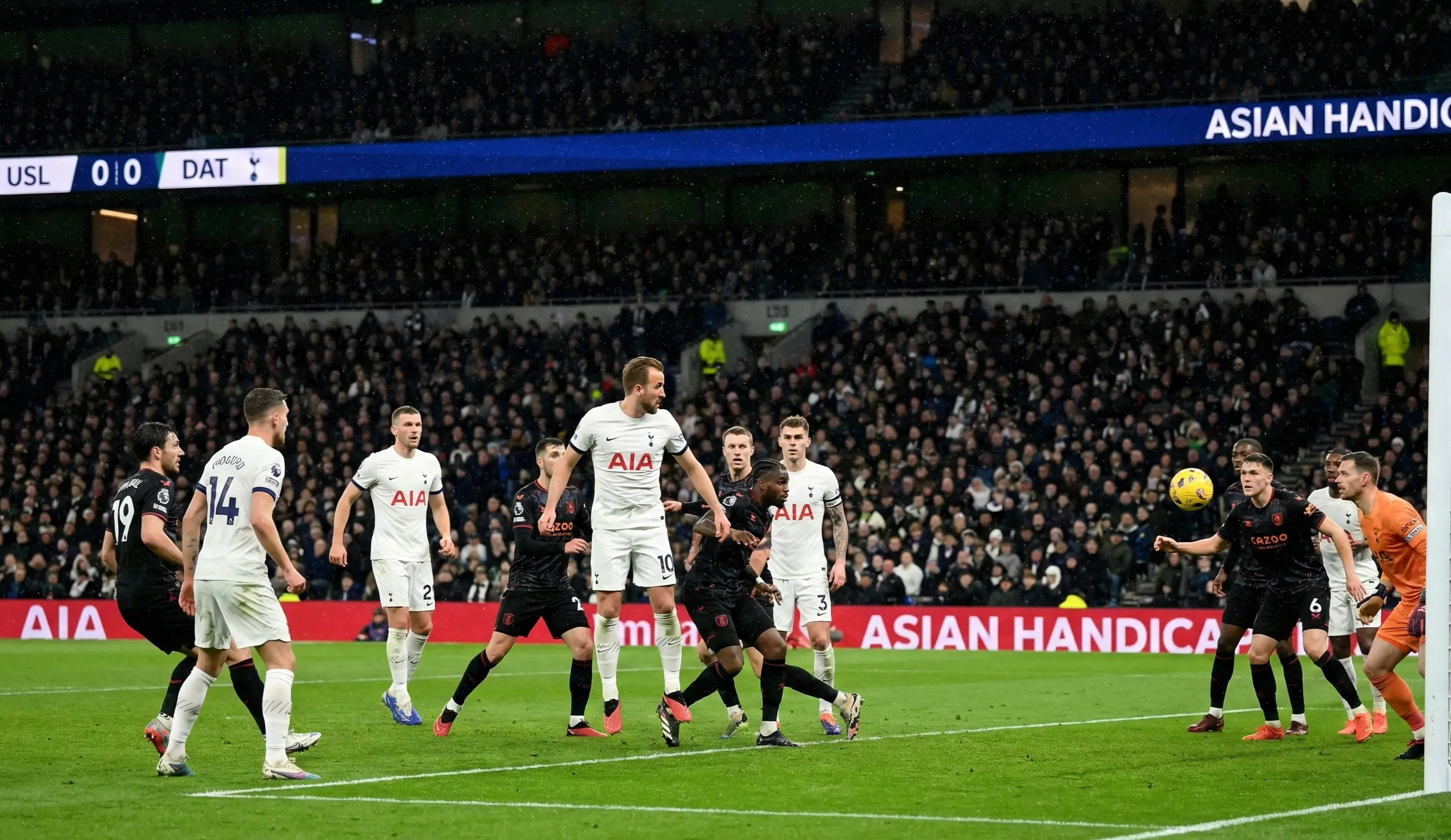
European handicaps make sense until you realize they include the draw as a third outcome, which defeats half the purpose of handicapping in the first place. Asian handicaps solved this problem by eliminating draws entirely, creating two-way markets that offer sharper odds and more nuanced betting opportunities. For Champions League betting specifically, where mismatches between elite clubs and qualifiers are common and margins matter intensely, Asian handicaps provide tools that traditional markets simply cannot match.
The Origins and Logic of Asian Handicaps
Asian handicap betting originated in Indonesia during the 1990s and spread globally through online bookmakers targeting Asian markets. The system’s genius lies in removing the draw from football betting – the outcome that most frustrates bettors because it often feels like nobody wins. By giving one team a virtual head start in goals, Asian handicaps ensure that someone covers the spread on every match.
The fundamental concept mirrors American point spread betting: a stronger team must win by a specified margin to “cover” their handicap, while underdogs can lose by less than the spread and still provide winning bets. A -1.5 handicap means the favorite must win by two or more goals. A +1.5 handicap means the underdog can lose by one goal and their backers still win. The half-goal increments guarantee no pushes since you cannot score half a goal.
Football’s low-scoring nature makes Asian handicaps particularly valuable. In basketball or American football, three points barely matter; in football, one goal is enormous. The spread between -1 and -2 represents a massive difference in implied probability and potential outcomes. Asian handicaps use quarter-goal increments (0.25, 0.75, 1.25, 1.75) to provide granular positioning between whole and half-goal lines, something European handicaps cannot offer.
The draw elimination improves odds compared to three-way European handicap markets. With only two outcomes, bookmaker margins get distributed across fewer possibilities, typically resulting in better prices. A -1 European handicap offers home win, draw on handicap, and away cover; the same position in Asian handicap offers only two options, and the odds reflect this simplified structure.
Understanding Asian Handicap Lines
Zero handicap (0) represents a level market with no head start for either team. If you back a team at 0 and they win, you win. If they draw, your stake returns – this is effectively “draw no bet.” If they lose, you lose. The zero line suits matches where teams are evenly matched and you have conviction about the winner without wanting draw exposure.
Half-goal handicaps (0.5, 1.5, 2.5) eliminate push possibilities entirely. At -0.5, your team must win by any margin – a one-goal victory suffices. At -1.5, they must win by two or more. At +0.5, the underdog needs only avoid defeat; draws count as covering. At +1.5, they can lose by one goal and still cover. These lines are straightforward: either your selection covers or it doesn’t.
Whole-goal handicaps (1, 2, 3) reintroduce push possibilities at exact margins. Back a team at -1, and if they win by exactly one goal, your stake returns. Win by two or more, you profit. Win by less than one goal or lose, you lose. These lines provide specific targeting when you believe a precise margin is likely.
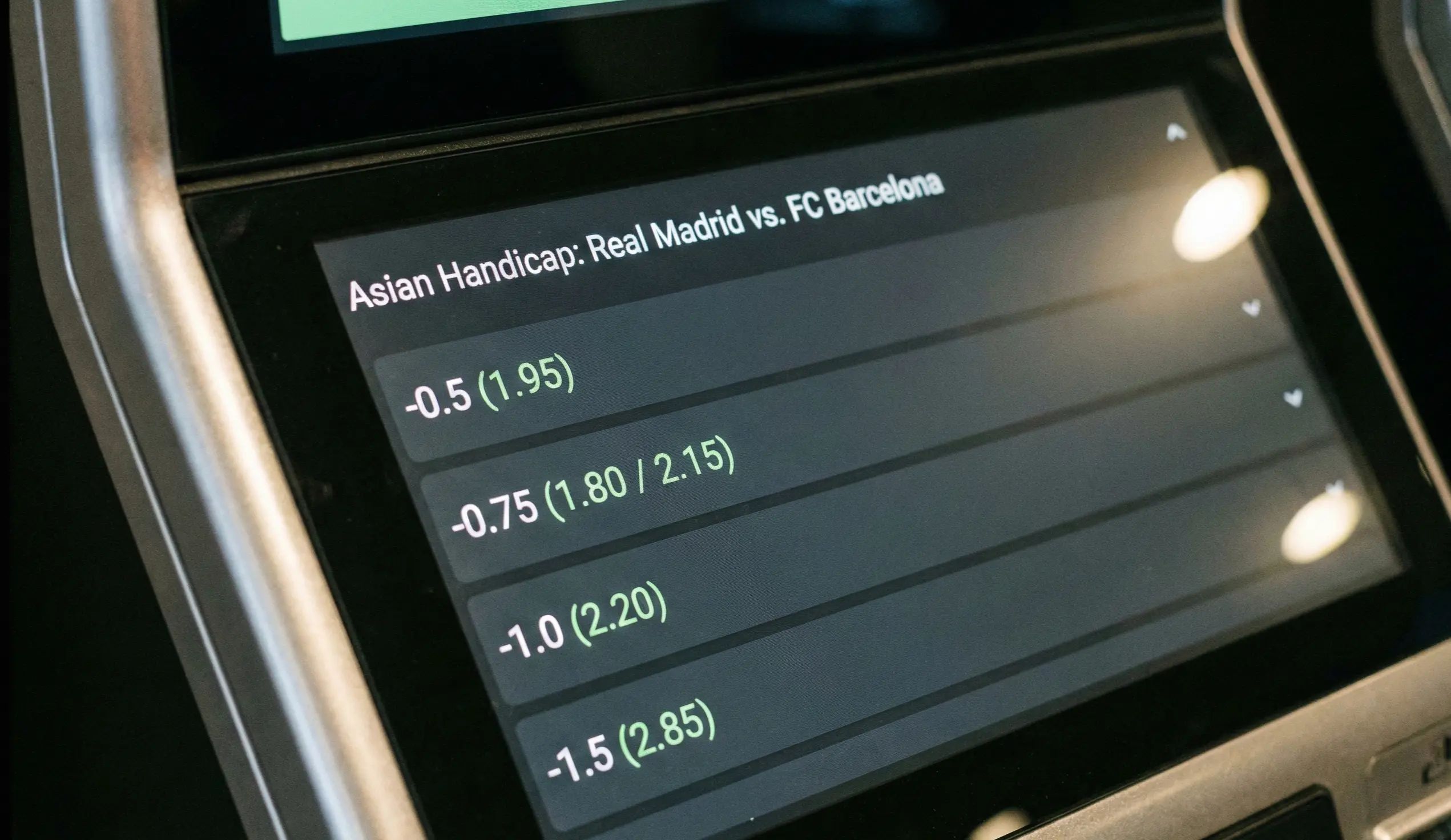
Quarter-goal handicaps (0.25, 0.75, 1.25, 1.75) split your stake between two adjacent lines. A -0.75 bet places half your stake on -0.5 and half on -1.0. If the favorite wins by exactly one goal, you win half (the -0.5 portion) and push half (the -1.0 portion). This partial outcome mechanism provides graduated results rather than all-or-nothing settlements.
How Quarter-Goal Handicaps Work
Quarter-goal lines initially confuse newcomers, but the mechanics are consistent once understood. Your stake automatically divides between the two nearest half-goal increments, and each half settles independently.
Example: Backing Bayern Munich -0.75 against Benfica. Half your stake goes on Bayern -0.5; half goes on Bayern -1.0. If Bayern wins 2-0, both halves win – full profit. If Bayern wins 1-0, the -0.5 half wins (Bayern covered by one goal), but the -1.0 half pushes (Bayern won by exactly one goal). You win half your potential profit plus get half your stake back. If Bayern draws 0-0, both halves lose – Bayern didn’t cover either line.
Example: Backing AC Milan +1.25 against Manchester City. Half goes on Milan +1.0; half goes on Milan +1.5. If City wins 2-0, the +1.0 half loses (Milan lost by more than one), but the +1.5 half wins (Milan lost by less than 1.5). You win half, lose half – typically a small net loss depending on odds. If City wins 1-0, the +1.0 half pushes (Milan lost by exactly one), and the +1.5 half wins. You win half your stake’s potential profit and return the other half.
The quarter-goal system provides insurance against marginal outcomes. If you believe a team will win but aren’t sure by how much, stepping down to a quarter-line protects against exact-margin pushes or losses. The trade-off is slightly reduced odds compared to the whole or half-goal line you might otherwise take.
Selecting Asian Handicap Lines for Champions League Matches
League phase mismatches require significant handicap lines. When Real Madrid hosts a Moldovan qualifier, the handicap might open at -2.5 or -3.0 reflecting Madrid’s massive quality advantage. The question isn’t whether Madrid wins but by how much. Analyzing historical blowout patterns, current form, and squad strength helps determine whether -2.5 offers value or whether -2.0 with push protection better suits the situation.
Competitive matches between pot 1 and pot 2 teams often see handicaps around -0.5 to -1.0 for the slight favorite. These lines ask nuanced questions: will Arsenal merely beat PSV, or win comfortably? Can Atletico keep it close against Bayern, or will Bayern dominate? Your analysis of tactical matchups, home advantage, and recent form guides line selection.
First legs of knockout ties frequently feature handicaps near zero or even pick-em pricing because cautious tactical approaches make decisive results unlikely. The -0.25 or +0.25 lines provide positions for bettors who expect slight edges without committing to full half-goal handicaps.
Second legs with first-leg deficits create unique Asian handicap opportunities. A team trailing 2-0 on aggregate must attack; the leading team might sit back. The handicap for the second leg alone (not aggregate) reflects this tactical context. Value sometimes exists on the chasing team covering smaller handicaps because their desperate attacking creates chances.
Asian Handicap Strategy for Value Betting
Line shopping becomes even more critical with Asian handicaps because small differences in handicap number matter enormously. A -0.75 at one book versus -1.0 at another represents meaningfully different propositions despite similar pricing. Always check multiple bookmakers before placing Asian handicap bets.
When the available handicap line doesn’t match your assessment, quarter-lines let you split the difference. If -1 feels too aggressive and -0.5 feels insufficient, -0.75 provides middle ground. This precision targeting distinguishes Asian handicap markets from blunter three-way betting.
Handicap movement reveals market sentiment. Sharp bettors hitting one side push lines in that direction. A line moving from -1.0 to -1.25 suggests sharp money likes the favorite to win comfortably. These movements can inform your betting or indicate when prices no longer represent value.
Combining Asian handicaps with totals analysis improves prediction accuracy. If you expect a high-scoring match favoring the home team, larger handicaps become more attractive because the expected goal differential expands. If you expect a tight, defensive affair, smaller handicaps or underdog positions make more sense regardless of which team is nominally favored.

Live Asian Handicap Betting
In-play Asian handicaps shift constantly based on match developments. An early goal for the favorite might see their handicap move from -1.0 to -1.75 as the market expects them to extend their lead. If the underdog equalizes, the line might snap back toward the opening number or even favor the underdog.
Live handicap betting rewards bettors who read game flow accurately. A dominant team leading 1-0 but creating numerous chances might offer value on extended handicaps before their second goal. A shaky lead for a counter-attacking side might see their handicap overextended, creating underdog value.
Red cards dramatically impact live handicaps. A team reduced to ten men sees their handicap immediately worsen as the market adjusts for expected defensive vulnerability. Sometimes these adjustments overcorrect, creating live value on the reduced side if you believe they can defend despite the disadvantage.
Cash-out options on Asian handicap bets let you lock in profit or cut losses based on match developments. If you backed -1.5 pre-match and the score is 2-0 at halftime, you’ve essentially won – but cashing out guarantees return while letting it ride risks a second-half collapse. The decision depends on your assessment of remaining risk versus the cash-out value offered.
Common Asian Handicap Mistakes
Confusing Asian and European handicaps leads to unexpected results. European -1 offers three outcomes (win by 2+, win by exactly 1, fail to cover); Asian -1 offers only two (win by 2+, everything else). Ensure you’re betting the market you intend by checking carefully before confirming.
Ignoring the stake-split mechanics of quarter-lines creates confusion about potential returns. A “half-win” on a -0.75 bet doesn’t mean you’ve failed – it’s a designed feature that protects against marginal outcomes. Understanding what you’re actually betting prevents frustration when settlements don’t match expectations.
Laying heavy handicaps on elite teams without considering variance courts disaster. Bayern Munich -3.5 might seem safe against a minnow, but one poor finishing day, one outstanding opposing goalkeeper performance, one early sending-off changes everything. Heavy favorites occasionally fail to cover large spreads; single losses at these odds devastate bankrolls.
Betting Asian handicaps without grasping implied win margins leads to mispriced selections. A -1.5 line implies the favorite wins by 2+ goals more than half the time when odds are near even money. If your actual assessment differs significantly from this implied probability, you’ve either found value or misunderstood the market.
Building Asian Handicap Expertise
Start with standard half-goal lines until the mechanics become intuitive. Once you’re comfortable with how -0.5, -1.5, and their positive counterparts settle, introduce quarter-goal lines and whole-number pushes. Building complexity gradually prevents costly confusion.
Track your results by handicap type. You might discover that you’re profitable on small handicaps (-0.5 to -1.0) but unprofitable on large ones (-2.0 and beyond). This insight suggests focusing on competitive matches where your analysis adds value rather than mismatches where variance dominates.
Develop pre-match routines that include checking Asian lines across multiple bookmakers. Even if you ultimately bet European handicaps or match results, Asian lines reveal market assessments of expected margins that inform all your betting decisions. The discipline of line-checking improves overall betting quality.
Accept that Asian handicaps require more thought than simple match betting but reward that effort with sharper odds and more precise positioning. The additional complexity isn’t arbitrary – it serves serious bettors who want tools matching the sophistication of their analysis. Mastering Asian handicaps elevates your Champions League betting to a level that casual punters never reach.
Find accurate strategies in the Correct Score Betting article for more insights.
Return to champions-league-bet.com for consistent updates
