
In-Play Strategies That Work
 Available in US
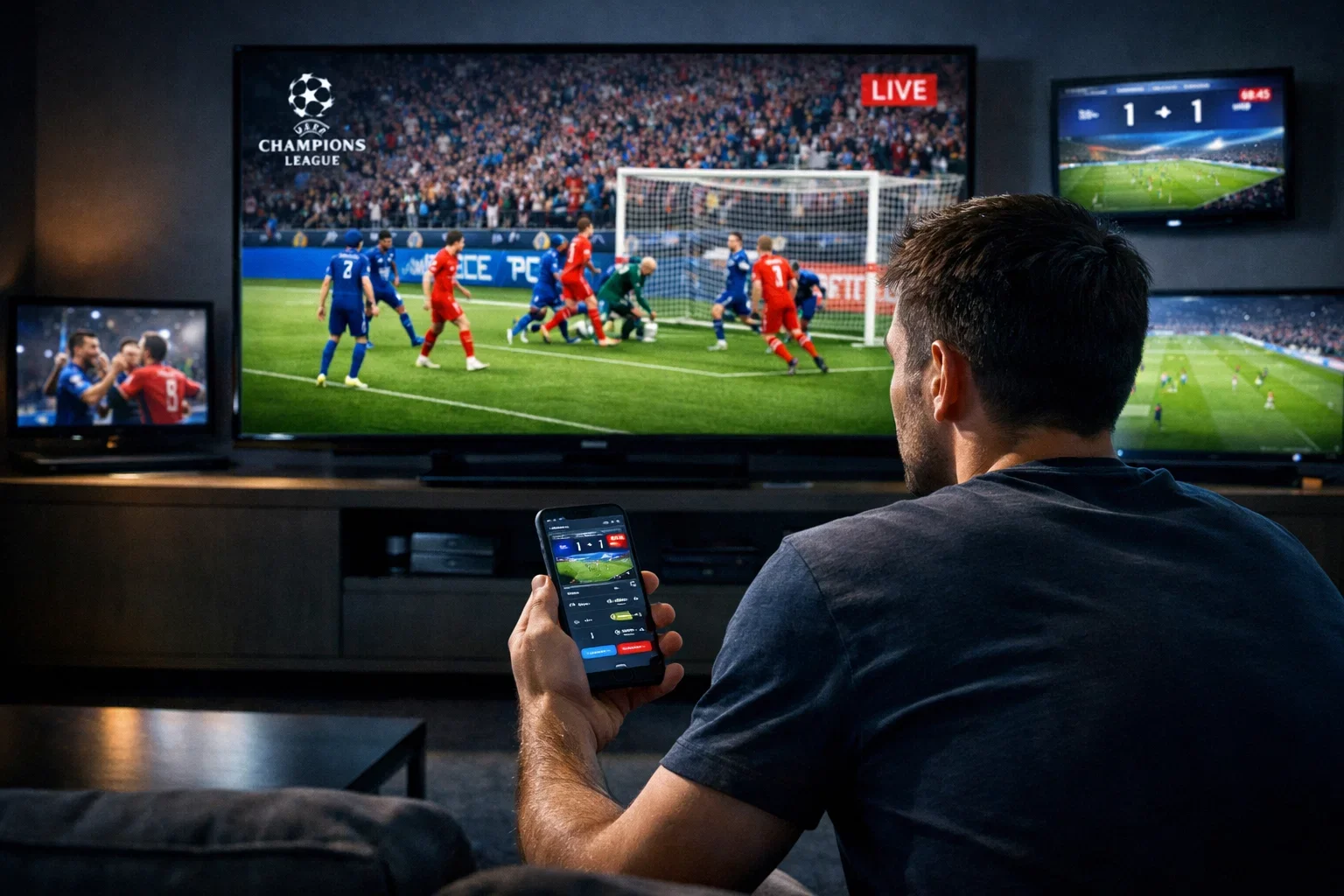
Pre-match betting is chess; live betting is speed chess. The same analytical skills apply, but time pressure, information flow, and emotional intensity transform the game. Champions League live betting offers unique opportunities precisely because the stakes are higher, the matches more dramatic, and the market reactions more pronounced than regular league fixtures. Mastering in-play requires combining quick decision-making with disciplined execution – a combination most bettors never develop.
Why Live Betting Differs
Live betting fundamentals diverge from pre-match analysis in several critical ways.
Information updates continuously as matches unfold. Pre-match analysis works from historical data and projections; live betting incorporates actual events – goals scored, cards shown, injuries sustained, tactical adjustments made. Your pre-match thesis might prove correct or collapse within fifteen minutes.
Odds move in real-time reflecting both scoreline changes and in-play dynamics. A match at 0-0 in the 85th minute prices differently than 0-0 in the 5th minute. Markets recalibrate constantly, creating windows where prices don’t fully reflect actual probabilities.
Emotional pressure intensifies when money rides on live events. Watching a match with active bets produces psychological states that affect decision-making quality. The urge to chase, hedge, or double down emerges from emotional rather than analytical triggers.
Betting windows are brief because odds adjust quickly to new information. Spotting value means nothing if you can’t execute before the market corrects. Live betting rewards preparation and quick processing over deliberate contemplation.
Pre-Match Preparation for Live Betting
Successful live betting begins before kickoff. Entering matches unprepared guarantees emotional rather than strategic decisions.
Identify potential scenarios for each match before it starts. What happens if the favorite falls behind early? What if the match stays scoreless through 70 minutes? What if there’s a red card? Pre-planning responses to likely scenarios enables quick execution when scenarios occur.
Know the teams’ tendencies under various game states. Some teams chase games aggressively when behind; others maintain disciplined approaches regardless of scoreline. Some teams collapse psychologically after conceding; others respond with renewed intensity. These patterns inform how you bet when specific situations arise.
Set specific triggers for live bet entry. Rather than vaguely intending to bet live, define concrete conditions: “If Team A concedes first but dominates possession, bet them at +X or better.” Specific triggers prevent impulsive betting while ensuring you act when predetermined value appears.
Establish position limits before any live betting begins. Decide maximum exposure per match and per market. These limits must be set pre-match when thinking is clear; setting them during live action with money at stake produces irrational limits.
Reading Match Flow
Live betting advantage comes from interpreting match dynamics faster and more accurately than the market.
Possession and territorial dominance indicate which team controls the match regardless of scoreline. A team trailing 1-0 but enjoying 70% possession and constant attacking pressure differs from one trailing 1-0 while barely crossing midfield. Markets often weight scoreline too heavily relative to actual match control.
Expected goals (xG) accumulation provides real-time assessment beyond raw scoreline. A team leading 1-0 but having faced 2.0 xG against them is surviving rather than dominating. Live xG tracking – available through various services – reveals match dynamics that scoreboard alone conceals.
Tactical adjustments visible during matches telegraph future developments. A manager making aggressive substitutions at 0-0 in the 60th minute signals intent to force the issue. Defensive substitutions while leading suggest the team will protect rather than extend. Reading these signals anticipates how the remaining minutes will unfold.
Physical condition and fatigue increasingly matters as matches progress. Teams that pressed intensively early often tire late; those who started slowly may grow into matches. European nights often feature different fatigue patterns than domestic matches due to travel, scheduling, and competition intensity.
Key Live Betting Moments
Certain in-play moments produce systematic market inefficiencies worth exploiting.
Immediately after goals creates brief windows where odds overcorrect. The team that just scored sees odds shorten aggressively; the team that just conceded sees odds lengthen dramatically. If your analysis suggests the goal doesn’t fundamentally change qualification probability as much as the market implies, value exists in betting against the immediate correction.
Following red cards produces similar overreactions. Markets price ten-man teams as severely disadvantaged, and over time they usually are. But immediately after red cards, the shocked team often consolidates defensively and the advantage team doesn’t press immediately. The immediate aftermath of red cards can differ from the eventual outcome.
Half-time offers betting windows when markets are available but no action occurs. Use this time to reassess first-half dynamics, adjust second-half expectations, and place bets before second-half markets become active. Some bettors focus exclusively on half-time betting because it removes the time pressure of in-play execution.
Late match situations with goal deficits create desperation. Teams needing goals commit numbers forward, opening space for counter-attacks. Late goals clusters both because trailing teams attack and because leading teams find counter opportunities. Over markets gain value when teams must chase.
Specific Live Betting Strategies
Backing teams to respond after early goals against exploits psychological overreaction to early deficits. Quality teams falling behind early in Champions League matches often respond with increased intensity. If your pre-match analysis favored a team and they concede within 15 minutes, their live odds might now exceed pre-match value.
Live under betting becomes attractive when matches stay scoreless into the second half. A 0-0 match at 60 minutes has already consumed most game time without goals; the probability of finishing 0-0 or 1-0 increases every scoreless minute. Live under odds shorten as scoreless time passes, but sometimes not fast enough.
Betting on next goal when tactical mismatches emerge focuses on specific segments rather than full match outcomes. If one team dominates without scoring, the next goal market offers exposure to that dominance without requiring you to predict final scorelines.
Draw no bet on trailing favorites provides insurance if comebacks fall short. A team losing 1-0 at the 60th minute might still be excellent value to win – but if they only equalize, you need coverage. Draw no bet returns stakes on draws while paying on victories.
Emotional Management in Live Betting
Live betting’s psychological intensity defeats many technically competent bettors. Managing emotional states is as important as analytical skills.
Recognize tilt indicators in yourself. Increased bet sizing after losses, faster betting decisions, anger at match outcomes, and deviation from pre-planned strategies all signal emotional compromise. When these appear, step away from live betting regardless of perceived opportunities.
Accept that live markets are efficient most of the time. Not every match produces exploitable live betting opportunities. Sometimes the wisest live betting decision is placing no live bets because nothing offers genuine value.
Separate spectating from betting when possible. Watching Champions League matches is enjoyable independent of betting. If you find yourself betting every match simply to maintain interest, betting has become entertainment rather than investment.
Use physical separation from betting platforms during matches you’re watching without active bets. The temptation to place impulsive live bets increases when watching with betting apps open. Keeping apps closed until specifically deciding to bet reduces impulse plays.
Champions League Specific Live Factors
European nights carry dynamics that affect live betting differently than domestic matches.
Crowd intensity and atmosphere in Champions League matches exceeds most domestic fixtures. This atmosphere can lift home teams or intimidate visitors in ways that regular league matches don’t produce. Factor in how specific clubs’ European home atmospheres affect live match flow.
Tournament context shapes in-play decisions. A team already qualified from their league phase group approaches live match situations differently than one fighting for survival. Knowing what each team needs from the match informs how they’ll behave under various scoreline scenarios.
Continental travel and timing affects physical states differently than domestic travel. Teams playing Tuesday after Sunday league matches face different recovery windows than teams playing Thursday after Wednesday matches. These schedules influence late-match physical states.
Player experience in European competition matters when pressure mounts. Some players elevate in Champions League atmospheres; others shrink. Recognizing which players handle European occasions informs individual assessments during matches.
Building Live Betting Discipline
Start with single-market focus rather than trying to bet multiple markets simultaneously. Master live totals before adding live handicaps; master match flow reading before incorporating player props. Building competence incrementally produces sustainable skill.
Track live betting results separately from pre-match results. Your pre-match analysis might be excellent while your live betting is disastrous, or vice versa. Understanding which timing mode produces profitable results informs where to focus energy.
Limit live betting to matches you’re watching or following closely. Betting live on a match you can’t see means trusting delayed statistics and score updates rather than actual observation. This information disadvantage rarely produces profitable live betting.
Review live bets with hindsight skepticism. Winning live bets aren’t automatically smart bets; losing live bets aren’t automatically mistakes. Evaluate whether decisions were correct given available information at betting time, not whether outcomes proved favorable.
Accept lower volume in live betting compared to pre-match. The combination of required focus, match timing, and genuine value occurrence means live betting opportunities are inherently less frequent than pre-match spots. Quality over quantity applies especially strongly to in-play markets.
Live betting rewards preparation, emotional control, and quick but disciplined execution. The Champions League provides premium content for live betting – matches where the stakes, quality, and drama produce the market inefficiencies that skilled live bettors exploit. But that same intensity makes live betting dangerous for those who lack emotional discipline. Know yourself before entering live markets.
Read our insights on understanding and interpreting betting odds in this article.
For consistent updates, refer to champions-league-bet.com.
